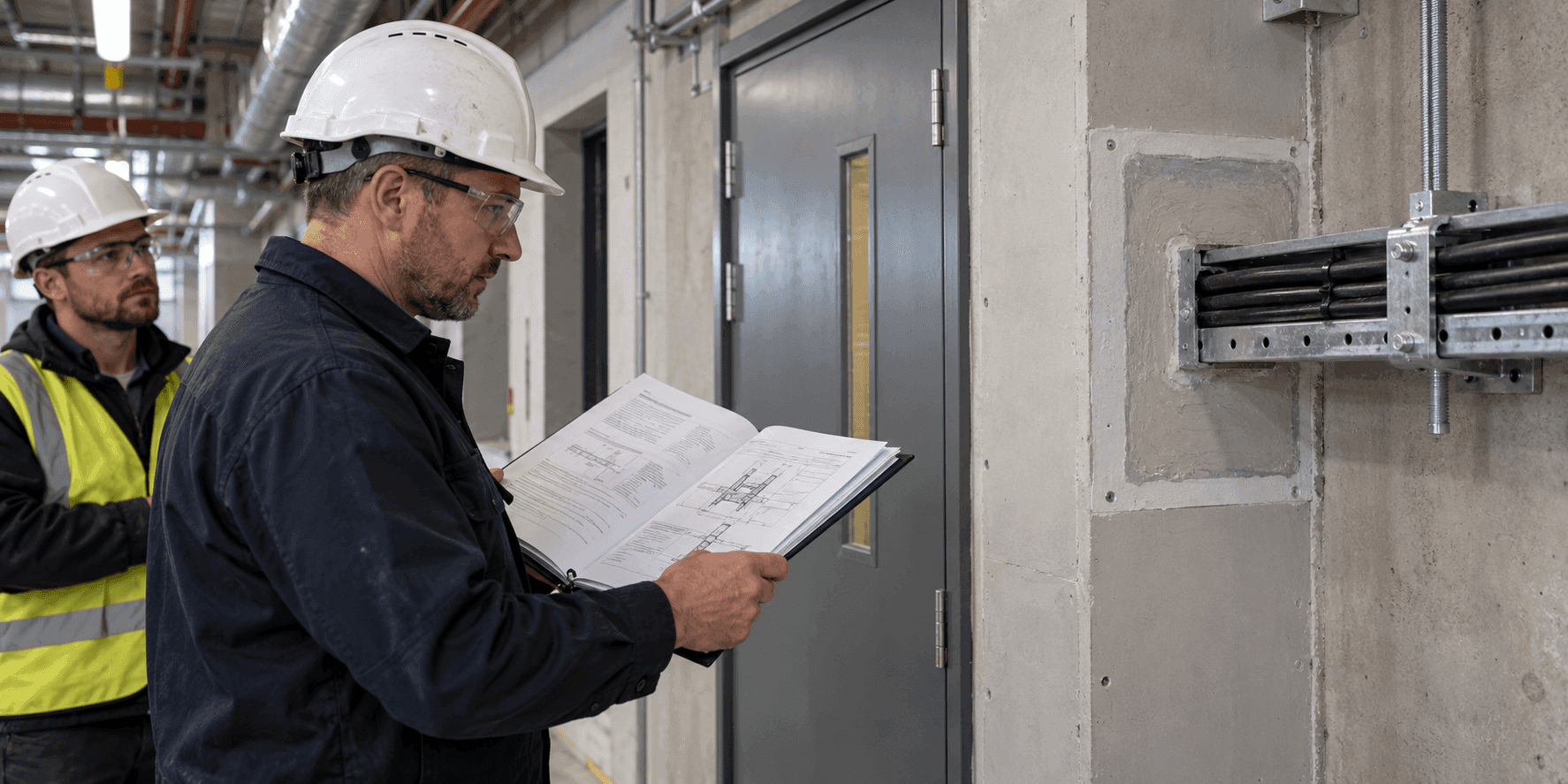
Why Tunnel Fire Protection Must Be Designed for Maintainability
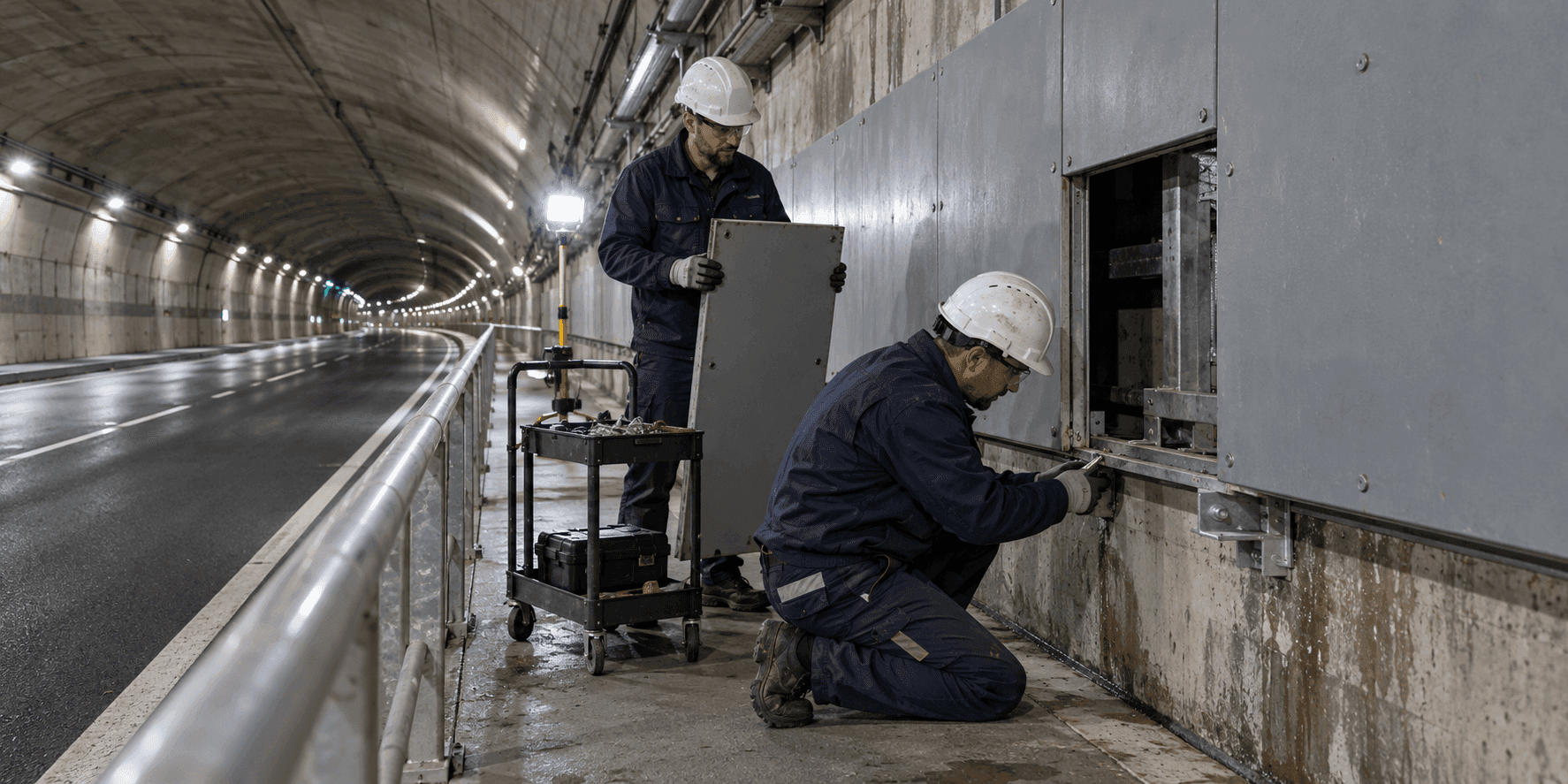
Why Tunnel Fire Protection Must Be Designed for Maintainability
A fire-protection panel needs replacing above an operational tunnel walkway. Reaching its fixings requires removing a cable tray, bringing in access equipment and isolating nearby services. The available maintenance window ends before reinstatement can be completed.
The panel may have suitable fire-test evidence, but the installation creates a recurring operational problem. If inspection or repair is unnecessarily difficult, preserving the approved configuration becomes harder.
Maintainability should therefore influence protection selection, detailing and access planning from the design stage.
Define the Maintenance Task Before Selecting the Detail
Identify what operators will need to inspect, remove, repair or replace throughout the system’s life.
Include the protection itself and the services behind it. A permanent lining may need periodic condition checks, while an equipment enclosure may require frequent access for unrelated maintenance.
PIARC’s road-tunnel guidance specifically links equipment selection and design with maintenance, inspection and refurbishment because of its role in the tunnel’s safety systems.
For tunnel fire protection systems, record these tasks alongside the fire-performance requirements. Both should inform the proposed arrangement.
Make Important Details Inspectable
A visible panel face provides limited information about concealed anchors, perimeter joints or the condition of the substrate.
Determine which details need direct access and how their condition can be assessed. Where inspection openings are required, incorporate them into the approved construction.
Coordinate lighting, working space and access equipment. An inspection point is of little practical use if it cannot be reached safely within the permitted closure.
Retain installation photographs and concealed-work records, but recognise their limits. They establish a baseline; they do not demonstrate the present condition of inaccessible components.
Design Removal and Reinstatement Together
Demountable construction can provide useful access, provided its connections and joints are supported by appropriate evidence.
Define the removal sequence, component weights, handling arrangements and replacement requirements. Check whether adjacent sections remain adequately supported while a panel is removed.
Reinstatement instructions should identify fasteners, fixing positions, seals and any components that cannot be reused.
For a fire-rated cable protection system, opening a cover to reach services must be followed by a verifiable return to the approved arrangement. A removable cover is a maintenance feature whose fire performance still depends on correct assembly.
Specify for the Actual Tunnel Environment
Water ingress, condensation, washing, vibration and accidental impact can affect protection and its supports.
Select materials, coatings and fixing arrangements for the conditions at their installed location. Consider drainage and details that could retain moisture against concealed steelwork.
Where cleaning involves pressure washing or chemicals, establish compatibility with panels, coatings, seals and joints. Fire-test evidence alone does not establish resistance to every maintenance exposure.
Inspection criteria should distinguish superficial damage from defects requiring technical assessment. Avoid leaving maintenance teams to invent acceptance limits on site.
Fit Repairs Into the Operating Window
Road-tunnel closures and railway engineering possessions impose practical constraints on mobilisation, isolation, access and handback.
Assess the complete intervention, including preparation, removal, substrate inspection, repair, curing where applicable and verification. A short installation time quoted for the replacement component may exclude most of this work.
PIARC notes that maintaining or refurbishing tunnels that cannot easily close requires specific operational and workforce-safety measures. These constraints need advance planning.
Where work temporarily impairs protection, define authorisation, interim arrangements and the conditions for returning the affected area to service.
Control Interfaces and Future Changes
Services often need modification before the surrounding fire protection reaches the end of its life.
Provide controlled arrangements for future access and service additions. Physical space within an enclosure does not automatically establish permission to add cables or enlarge penetrations.
At fire compartmentation walls, document approved openings, perimeter details and movement provisions. Assign responsibility for reviewing alterations and inspecting reinstatement.
Hand Over a Usable Maintenance Baseline
Operators need records that connect each asset to its approved construction and maintenance requirements.
Include location references, drawings, evidence, inspection criteria, repair procedures and replacement-component information. Identify specialist tasks and any access or isolation requirements.
Use the maintenance review to test a simple question: can the operator inspect, repair and reinstate this system as intended?
Tunnel fire protection must retain its capability over years of service. Designing maintenance access and repair procedures alongside fire performance makes that capability more achievable - and easier to verify.