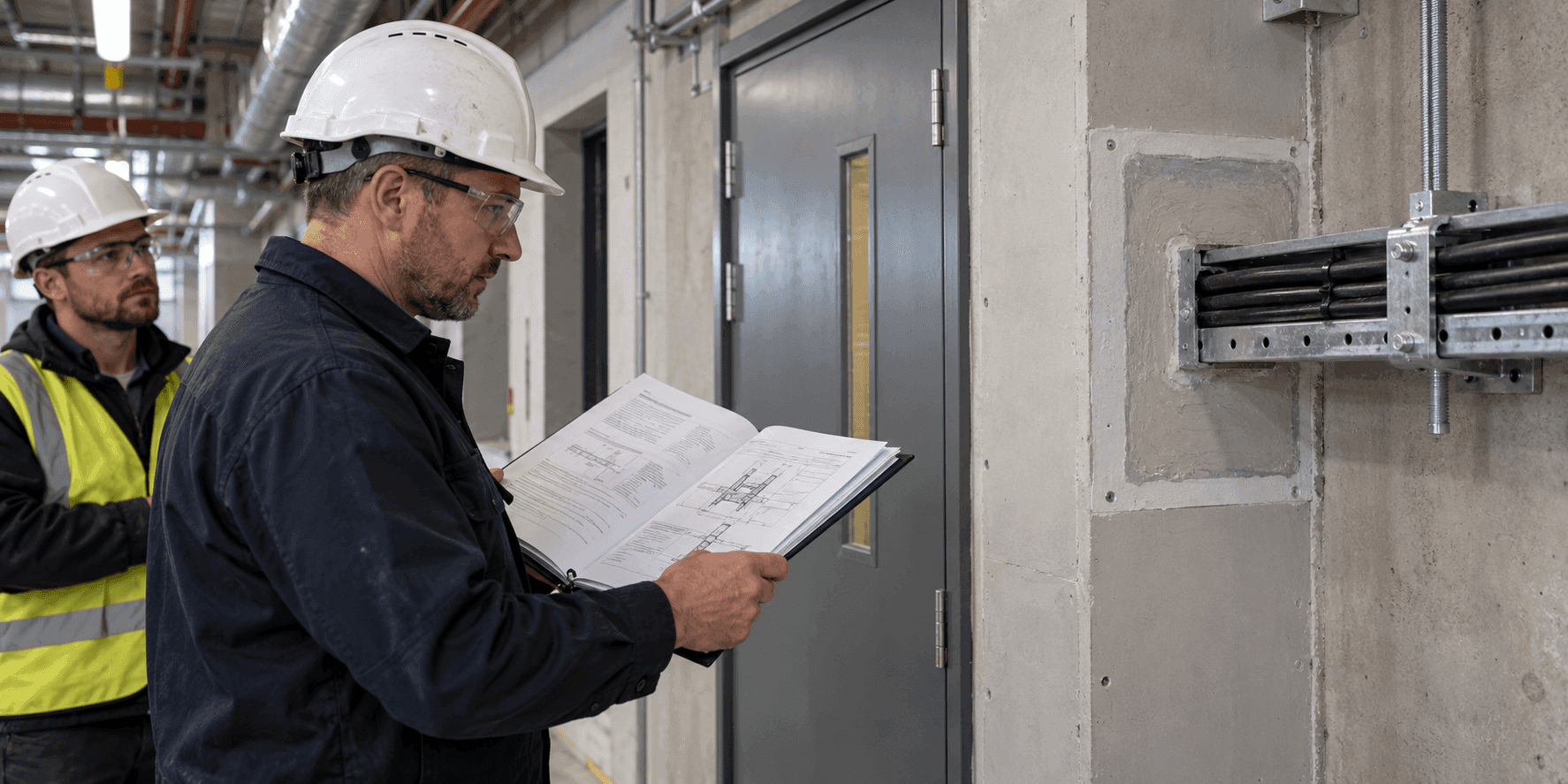
Road Tunnel vs Metro Tunnel Fire Protection
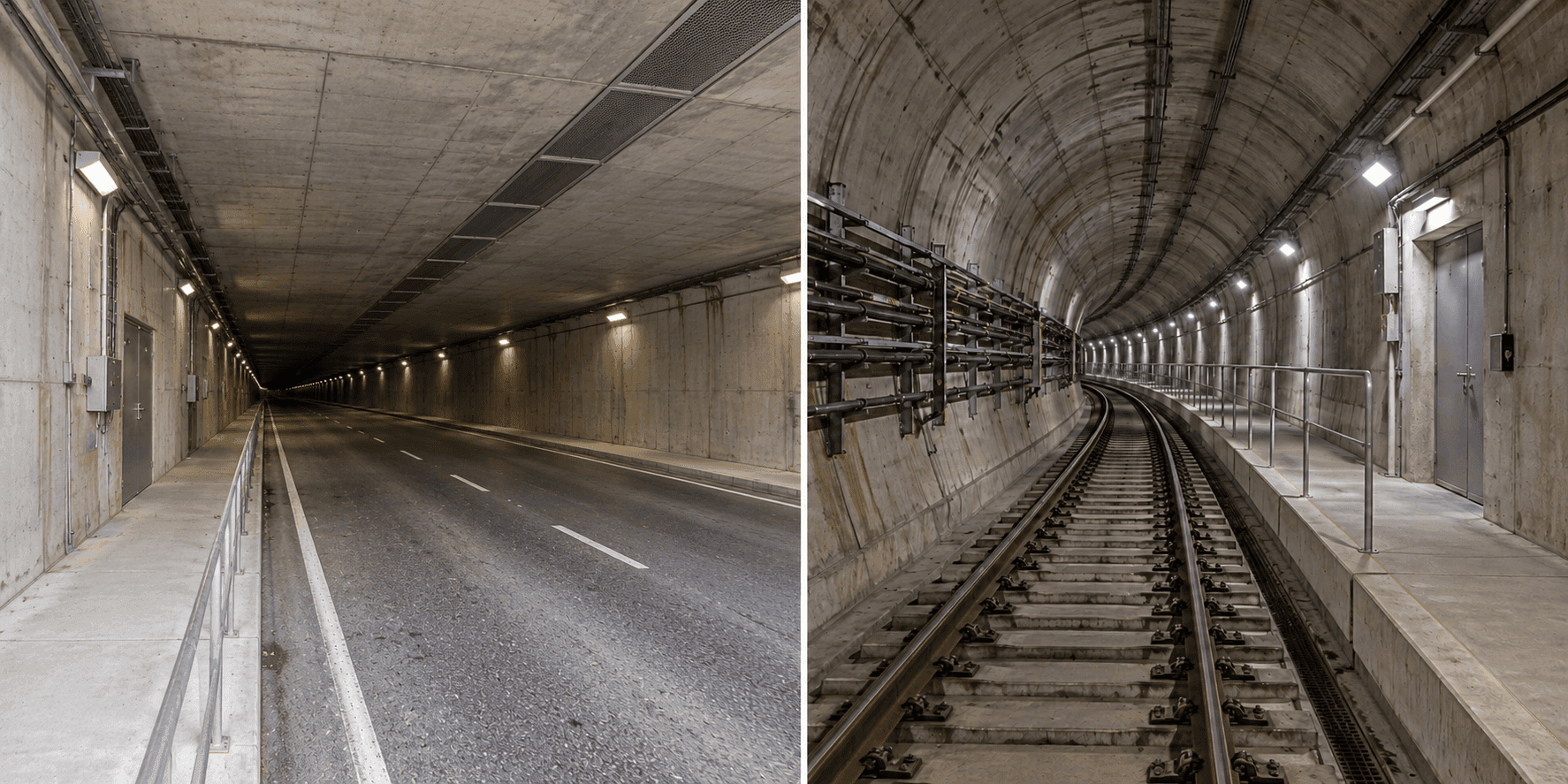
Road Tunnel vs Metro Tunnel Fire Protection
A road tunnel carrying heavy goods vehicles and a metro tunnel carrying passenger trains may have similar concrete linings. Their fire-protection requirements, however, cannot be selected from the tunnel dimensions alone.
The potential fuel load, distribution of occupants and incident response differ. So do the systems needed to support evacuation and the opportunities for inspection and repair.
The comparison should begin with the operating environment. From there, engineers can establish the fire scenarios, required protection and evidence appropriate to each installation.
Start With the Permitted Vehicles
Road tunnels may accommodate passenger cars, buses, goods vehicles and, where permitted, dangerous-goods transport. Traffic restrictions therefore influence the credible fire scenarios.
PIARC distinguishes passenger-vehicle fires from potentially much larger fires involving heavy-goods cargo or accumulated flammable liquids. The permitted traffic mix matters when defining the design fire.
Metro scenarios depend on the actual rolling stock and its equipment, materials and operating conditions. Consider credible ignition locations, fire growth and the possibility of a train stopping between stations.
Neither tunnel type has a universally more severe fire. The assessment must establish the relevant exposure rather than assign it from the transport category.
Compare How People Reach Safety
Road users may leave individual vehicles at different positions along a congested carriageway. Their familiarity with the tunnel and response to instructions can vary.
Metro passengers may need to leave a train through designated doors, negotiate the train-to-walkway interface and move along a constrained route. Passenger numbers, reduced mobility and train position influence the evacuation assessment.
Where the operating strategy seeks to bring an incident train to a station, assess the contingency in which it cannot reach one. APTA guidance recognises that evacuation from a train is easier at a station than within a tunnel.
These differences shape the protection required for walkways, cross-passages, doors, lighting and communications.
Coordinate Ventilation With the Incident
Ventilation strategy must reflect occupant locations and the intended evacuation direction.
In a road tunnel, congestion or bidirectional traffic may place people on both sides of a fire. Directing smoke downstream cannot be assumed acceptable without considering who remains there.
In metro tunnels, train blockage, piston effects, station connections and ventilation shafts influence airflow. The incident train’s position also affects the available response.
For tunnel fire protection systems, identify which ducts, fans, dampers and controls must remain available. Protecting individual components is useful only when the complete operating sequence remains supported.
Select Structural Exposure Deliberately
Tunnel type alone does not determine the required temperature–time curve or protection duration.
Establish these through the applicable authority requirements and project fire assessment. Consider the credible fire load, structural vulnerability and consequences of damage, including effects on adjacent infrastructure.
A road-tunnel lining result should not automatically qualify protection for a metro tunnel, or vice versa. Review the exposure, acceptance criteria, substrate, loading, joints and anchor arrangement.
Also distinguish structural fire resistance from smoke-control design. A lining can meet its thermal criteria without establishing tenable evacuation conditions.
Protect the Relevant Service Dependencies
Both tunnel types depend on emergency systems, but their arrangements differ.
Road tunnels may rely on traffic controls, emergency communications, lighting and ventilation. Metro systems introduce railway-specific dependencies, including traction-power isolation and operational communications.
A fire-rated cable protection system needs evidence appropriate to the required circuit function. Review supports, branches and terminations, together with the power and control connections serving the equipment.
Likewise, a fire-rated equipment enclosure does not automatically prove that its contents remain operational. Equipment temperature limits and functional requirements need assessment.
Account for Different Operating Loads
Metro installations may experience repeated train-induced pressure fluctuations. Road-tunnel equipment faces its own airflow, vehicle-impact and maintenance exposures.
Water ingress, corrosion, washing and vibration can affect either environment. Specify suitability for the actual location and installation.
Inspection access also differs. Road work may require lane or tube closures; metro interventions often depend on restricted engineering possessions.
Removable protection should have defined reinstatement details that maintenance teams can complete within those constraints. Accessibility influences whether the approved configuration can be preserved reliably.
Build the Specification Around the Operation
A useful comparison records vehicle or rolling-stock assumptions, fire scenarios, evacuation arrangements, ventilation response and essential-system duties.
Then define structural and separating-element performance, applicable evidence, environmental requirements and maintenance procedures.
Road and metro tunnels share engineering principles, but their operating assumptions need separate examination. Protection becomes appropriate when the specified system, installed interfaces and emergency procedures all address the same assessed incident.