How Fire Protection Supports Faster Tunnel Recovery
How Fire Protection Supports Faster Tunnel Recovery
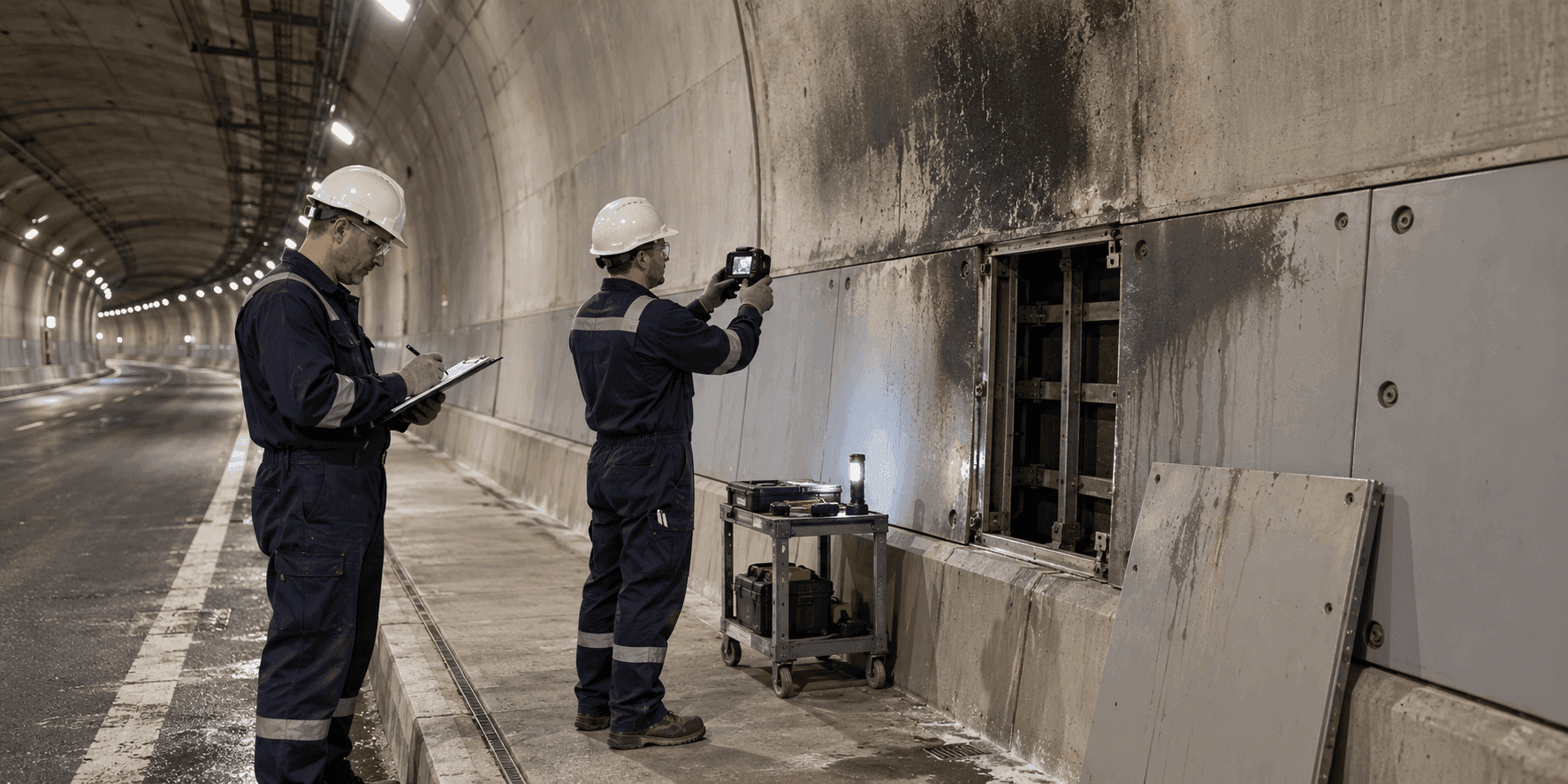
The fire is extinguished, but the tunnel remains closed. Engineers need to establish the condition of the lining, inspect concealed supports, assess electrical systems and determine which protection components require replacement.
Recovery depends on the extent of damage and how readily the installation can be assessed and restored. Those questions deserve attention during design.
Fire protection can help limit the consequences of an incident, but a fire rating alone does not establish a reopening time. Repairability, records and access influence what happens afterwards.
Define Recovery as a Design Objective
Life safety remains the primary objective. Asset protection and service continuity can introduce additional requirements beyond preventing collapse during evacuation.
PIARC identifies limiting traffic disruption during post-fire repairs as a supplementary objective of structural fire resistance in road tunnels.
Discuss recovery expectations with the owner early. Identify assets whose damage could drive prolonged closure, specialist replacement or extensive civil works.
For tunnel fire protection systems, translate those concerns into defined performance and maintainability requirements. Avoid assuming that meeting a minimum fire-resistance period also meets the owner’s recovery objectives.
Limit Damage to Difficult-to-Replace Assets
A damaged removable panel and a damaged primary tunnel lining present very different repair problems.
Where appropriate, thermal protection can reduce exposure of the underlying structure. Its effectiveness depends on the assessed fire, substrate, loading, joints, anchors and complete installed arrangement.
Structural stability during fire does not mean the structure emerges undamaged. Post-fire assessment may still be needed to establish residual capacity, deterioration and necessary repairs.
Identify the acceptable damage objectives through structural and fire engineering review. A generic protection thickness cannot establish them independently of the tunnel construction.
Protect Critical Services With Clear Expectations
Power, communications and ventilation may be required during the incident and again during assessment and reinstatement.
A fire-rated cable protection system can support a defined circuit-survival objective when backed by applicable evidence. That objective should distinguish operation during exposure from suitability for continued service afterwards.
The same distinction applies to a fire-rated equipment enclosure. Limiting internal temperature during a test does not automatically establish that equipment can return to normal duty after a real fire.
Plan for inspection, testing and replacement decisions rather than assuming protected equipment remains reusable.
Make Damage Accessible for Assessment
Recovery can stall when the condition of concealed construction is uncertain.
Design access to anchors, joints, supports and substrates where inspection is expected. Record how protective panels can be removed without destabilising adjacent sections or damaging services.
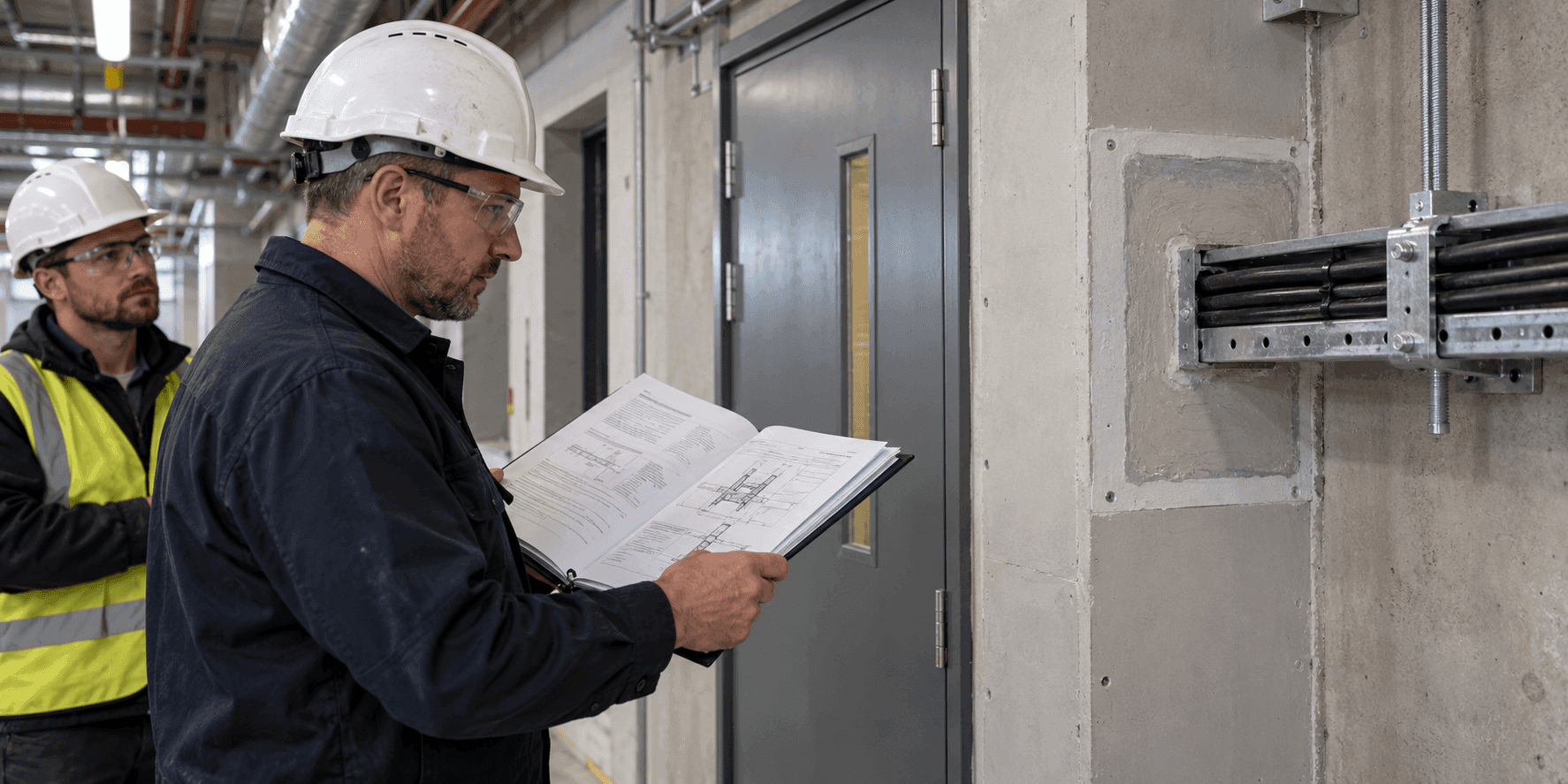
Divide asset records into identifiable locations so incident observations can be matched to drawings and installation details.
Baseline photographs, approved configurations and inspection histories help assess what has changed. They support investigation but do not replace examination of the affected installation.
Plan Replacement Before the Incident
Repair arrangements should identify approved replacement materials, compatible components and the technical review required for deviations.
Consider panel dimensions, lifting access, equipment clearances and the sequence needed to expose and repair damaged areas. Modular construction may simplify replacement where the complete arrangement supports that approach.
Keep realistic procurement information for specialist components. A readily available panel may still depend on bespoke framing, fixings or seals.
Protection exposed to fire should be assessed against defined criteria. Visual appearance alone cannot establish retained performance, and fire-test evidence does not automatically authorise reuse.
Reopen Through Verified Recovery
Post-fire decisions need coordination between structural engineers, fire specialists, systems teams and the operator.
Establish the condition of affected assets, complete repairs and verify the safety functions required for the proposed operating state. Include interfaces between repaired and retained construction.
Update drawings, inspection records and the asset register before closing out the work.
Fire protection can support faster recovery by limiting damage and making reinstatement more manageable. The practical benefit depends on an installation that can be inspected, repaired and verified—and on evidence supporting its return to service.