


Why GRP Solid Slab Flooring Panels Matter
Industrial floors face extreme loads, chemical exposure and continuous use. Conventional steel and timber panels corrode, weaken, and fail, increasing structural risk and driving costly maintenance cycles. Our GRP solid slab flooring panels are engineered to perform under demanding conditions, ensuring load integrity, slip resistance, and long-term compliance. Without engineered flooring solutions:
What is a GRP Solid Slab Flooring Panel?
A GRP solid slab flooring panel is an engineered composite panel designed to withstand heavy loads, chemical exposure, and continuous industrial use, while maintaining structural integrity and slip-resistant performance under demanding conditions.

Load-Bearing Strength
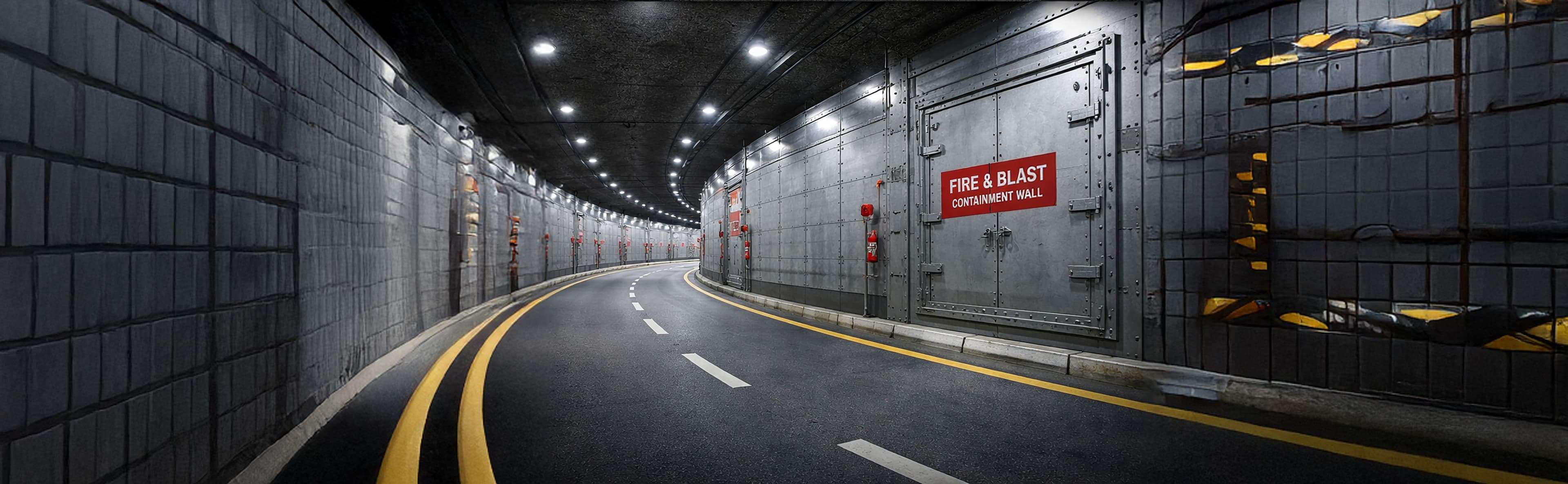
Designed to withstand severe tunnel fire curves while maintaining structural integrity.

Corrosion Resistance
Performs reliably in wet, chemical, and corrosive environments where steel and timber panels rapidly degrade.

Slip Resistance
Delivers a high-grip surface finish that meets industry safety standards for personnel protection in all conditions.

Lightweight & easy Installation
Significantly lighter than steel alternatives, reducing handling risk and installation time without sacrificing strength.

Low Maintenance
Requires minimal upkeep over its service life, reducing inspection frequency and long term oepartional costs.

How the Panel Performs for You
Invicta ANARA engineers GRP solid slab flooring panels through an integrated process combining material research, certified manufacturing, and technical installation support. Each panel is designed, tested, and installed to a unified quality standard, ensuring full traceability from material selection through to onsite performance. All panels are engineered to meet applicable load, corrosion, and safety standards for industrial and infrastructure applications.
Panels are engineered to carry heavy dynamic and static loads without deflection or cracking, maintaining full structural performance across the service life of the installation.
Performs reliably in wet, chemically aggressive, and corrosive environments, resisting degradation where steel and timber panels require frequent replacement.
Delivers a high-grip surface finish that meets industrial safety standards reducing slip risk and accelerating installation timelines without compromising load performance.
Significantly lighter than steel alternatives, reducing manual handling risk and accelerating installation timelines without compromising load performance.
It requires minimal routine maintenance over its operational life, which reduces inspection frequency, lowers long-term costs, and maximises asset uptime.
Advantages Over ConventionalTunnel Protection Methods
Traditional Methods
Concrete or plain-lining risk of spalling, reinforcement failure, structural collapse under fire/heat.
Spray-applied fireproofing / fire boards / mortars may require frequent maintenance, have limited durability, may degrade upon moisture or impact
Passive fire barriers only (fire partitions, boards) limited or no blast, impact, debris, or smoke/gas protection.
Heavy & bulky steel/concrete barriers are difficult, high-cost and have long downtime for retrofit/repair.
SECURA Tunnel Wall Benefits
The composite barrier prevents spalling, maintains integrity, protects reinforcement & structure under extreme fire or blast.
Durable, moisture-resistant, corrosion-proof composite system — long lifecycle, low maintenance, high resilience.
Multi-hazard protection (fire, blast, impact, smoke/gas, thermal, acoustic), enabling comprehensive risk mitigation.
Lightweight modular panels — faster installation, retrofit friendly, minimal disruption to tunnel operations.
Sectors We Serve
Our solutions are designed for sectors where infrastructure reliability, safety, and long-term performance are critical.

Energy & Utilities

Energy & Utilities
- Power & Grid Infrastructure
- Energy & Process Facilities
- Onshore & Offshore Assets
- Renewable Energy Infrastructure

Industrial
Industrial
- Chemical & Process Plants
- Manufacturing & Heavy Industry
- Hazardous Material storage facilities
- Automotive & Industrial Campuses

Transportation
Transportation
- Airports & Aviation Facilities
- Metro, Rail & Mass Transit Systems
- Roads, Highways & Vehicular Tunnels
- Ports, Shipyards & Marine Transport Infrastructure

Defence
Defence
- Defence & Command Facilities
- Critical National Infrastructure (CNI)
- Secure & Hardened Assets
- Border, Coastal & Strategic Installations

Infrastructure
Infrastructure
- Data Centres & Digital Infrastructure
- Public Venues & Stadia
- Cultural & Institutional Buildings
- Government & Diplomatic Facilities

Commercial/Mixed-Use
Commercial/Mixed-Use
- Hospitality & Leisure
- Financial & Commercial Buildings
- Mixed-Use Landmark Developments




Inputs for Specifying GRP Solid-Slab Flooring Panels
Confirm the flooring layout, structural requirements and operating conditions before selecting the panel and fixing arrangement.
Design loads and support spacing
Provide the design loads, load distribution, support spacing and bearing arrangement applicable to the proposed flooring.
Panel and deflection requirements
Confirm the required panel arrangement and project deflection criteria using the applicable product and structural information.
Surface and access requirements
Define the surface finish, slip requirements, access routes, openings and transitions to adjoining floor areas.
Environmental exposure
Identify chemical, moisture, weather and other exposure conditions relevant to material and fixing selection.
Frequently Asked Questions About GRP Solid-Slab Flooring Panels
Direct answers to common early-stage specification and coordination questions.
Provide the flooring layout, design loads, support spacing, deflection criteria, surface requirements, environmental exposure and details of openings or adjoining construction.
Coordinate bearing areas, support spacing, panel joints, edge conditions, fixings and transitions to adjacent flooring before finalising the layout.
Review structural and material evidence applicable to the selected panel, span, loading and support arrangement. It should correspond with the proposed configuration and interfaces.