
When Should Existing Passive Fire Protection Be Reassessed?
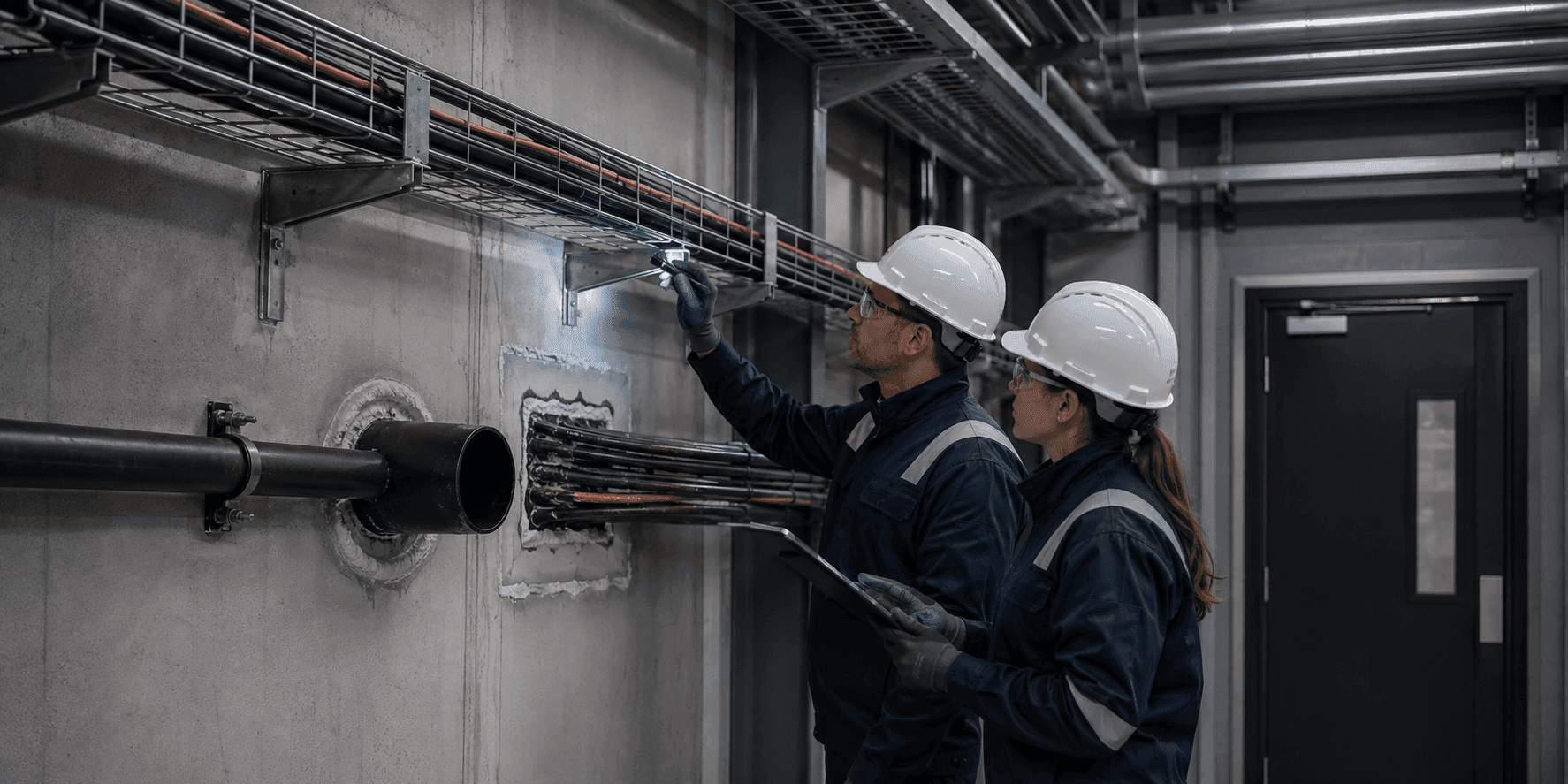
Existing passive fire protection should be reassessed whenever changes, damage or uncertainty could affect the intended fire-resisting boundary. Reassessment connects the current facility, fire strategy and installed condition with relevant system evidence.
What Is a Passive Fire Protection Reassessment?
A passive fire protection reassessment is a structured review of whether existing walls, floors, doors, penetration seals, joints, structural protection and related boundaries remain suitable for their intended role. It is more than a visual condition survey. The review considers what the boundary is expected to achieve, how the building or facility has changed and whether the installed configuration can still be verified.
Existing facilities rarely remain exactly as handed over. Services are rerouted, rooms change function, equipment is replaced and maintenance work creates new openings. Even well-intended repairs can introduce materials or details that do not match the original system. Documentation can also become incomplete as ownership and contractors change.
Reassessment does not mean that every existing installation must automatically be replaced. It establishes what is known, identifies material gaps and defines proportionate inspection, evidence review, remediation or further engineering assessment.
- Fire-strategy basis: Confirm the compartment, protected element or asset function the system is intended to support.
- Installed condition: Inspect continuity, damage, openings, joints, supports, doors and visible alterations.
- Configuration evidence: Compare identifiable systems and details with available approved records and applicable evidence.
- Change history: Review refurbishment, service installations, equipment changes, incidents and prior repairs.
- Risk and priority: Prioritise uncertainty and defects according to boundary function, exposure and consequence.
- Controlled action: Define investigation, repair, verification, records and responsibilities for close-out.
Events That Should Trigger Reassessment
- Refurbishment: Layouts, ceilings, services or finishes affect protected boundaries. Review before work and verify affected systems after completion.
- Service changes: New cables, pipes or ducts pass through walls and floors. Check openings, supports and penetration protection against suitable evidence.
- Damage or incident: Impact, water, heat, vibration or local fire affects the system. Assess the full affected area rather than only the visible surface.
- Change of use: Occupancy, process, storage or operating pattern changes. Revisit fire-strategy assumptions and required boundary performance.
- Missing records: The installed system or permitted application cannot be confirmed. Investigate, classify uncertainty and obtain competent technical review.
- Audit finding: Inspection identifies defects, inconsistency or uncontrolled alteration. Set priorities, remedial scope, verification and record updates.
How to Carry Out a Proportionate Reassessment
The review should begin with the intended fire-safety function and narrow uncertainty in a controlled sequence.
- Establish scope: Identify affected compartments, systems, interfaces and the reason for reassessment.
- Gather current information: Collect fire-strategy drawings, approved details, registers, maintenance records and change history.
- Inspect representative and critical areas: Record system type, location, dimensions, services, damage and visible configuration.
- Compare with evidence: Check whether the identified arrangement remains within documented application and limitations.
- Resolve uncertainty: Use further access, investigation or competent assessment where records and observations are insufficient.
- Close and maintain: Verify remedial work, update the asset register and define recurring inspection needs.
Signals That Existing Protection May No Longer Be Reliable
Some triggers are obvious, while others appear through inconsistencies between drawings, operations and the installed asset.
- Unrecorded penetrations: Recent services cross protected boundaries without traceable system details.
- Repeated local repairs: Patches use mixed materials or obscure the original construction.
- Door or opening changes: Hardware, glazing, frames, leaves or opening sizes have been altered.
- Movement and deterioration: Cracking, corrosion, moisture, deflection or failed joints affect continuity.
- New hazard or equipment: Changed fuel load, process or criticality no longer matches earlier assumptions.
- Conflicting documentation: Drawings, labels and site conditions describe different configurations.
What Reassessment Helps Asset Owners Achieve
A disciplined review replaces assumptions with a prioritised picture of current protection and required action.
- Visible risk: Defects and evidence gaps are related to the function of each boundary.
- Targeted remediation: Work focuses on material issues rather than unnecessary wholesale replacement.
- Safer future changes: Accurate records help later teams identify systems before disturbing them.
- Stronger governance: Inspection, approval and close-out responsibilities become clearer.
What Should the Reassessment Report Confirm?
The report should be usable by designers, facility teams, contractors and reviewers, not simply list photographs and generic observations.
- Why was the review required?: State the trigger, affected scope and fire-safety objectives.
- What was inspected?: Record locations, access limitations, sampling basis and concealed areas.
- What can be verified?: Separate confirmed systems from uncertain or unsupported arrangements.
- Which findings matter most?: Prioritise by boundary function, defect extent and consequence.
- What happens next?: Assign investigation, remediation, verification, records and review dates.
How Invicta ANARA Supports Systems-Level Infrastructure Delivery
SECURA by Invicta ANARA supports relevant passive fire-protection and compartmentation requirements for new and existing assets. Reassessment and remedial recommendations should remain tied to the facility fire strategy, complete installed configuration, applicable evidence and agreed review responsibilities.
SECURA by Invicta ANARA. Explore critical containment and protection systems for relevant fire and infrastructure risks.
Fire protection systems. Review Invicta ANARA fire-protection capabilities and related applications.
Industrial fire compartmentation walls. Explore compartmentation walls planned around complete assemblies and project interfaces.
Frequently Asked Questions
Direct answers to common questions about passive fire protection reassessment.
When should passive fire protection be reassessed?
Reassess it after refurbishment, service changes, damage, change of use, new hazards, material audit findings or loss of reliable documentation.
Is a visual inspection enough?
Not always. Visual inspection identifies condition, but system suitability may also require drawings, evidence, opening-up or competent technical assessment.
Does reassessment mean replacing every old system?
No. It identifies what remains suitable, what is uncertain and which defects need proportionate investigation or remediation.
Should passive fire protection be checked before refurbishment?
Yes. Early review helps protect existing boundaries and plan compliant details before new services and openings are installed.
What records should be updated?
Update locations, system identities, evidence references, photographs, repairs, approvals, limitations and future inspection needs.
Share the facility changes, fire-compartment information and available system records so the required reassessment scope can be reviewed. Discuss an Infrastructure Requirement.