What Makes Critical Infrastructure Resilient?
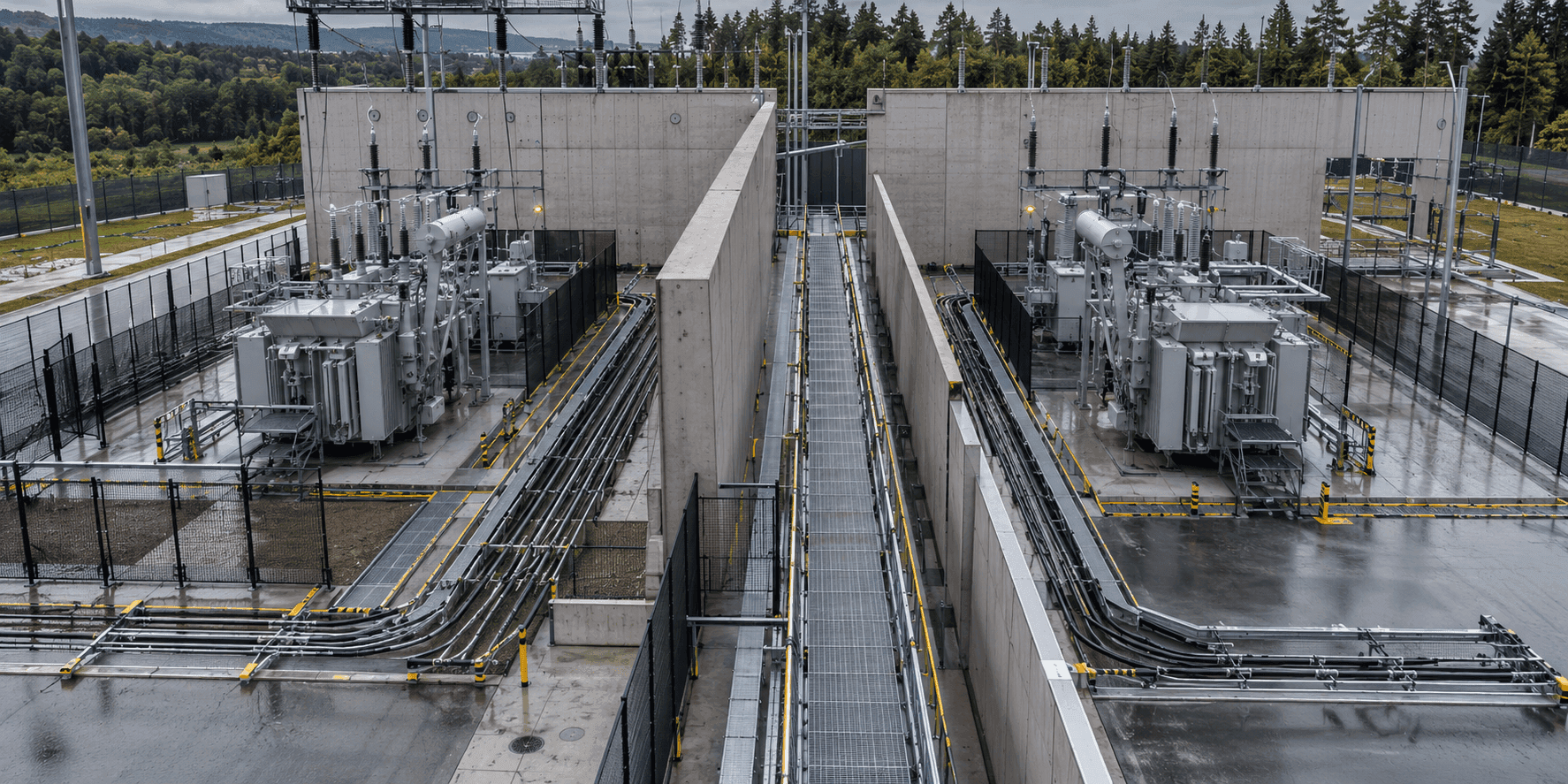
Critical infrastructure resilience is the ability of an asset or system to prepare for disruption, limit its effects, continue priority functions and recover in a controlled way. It combines protection, redundancy, maintainability, information and response planning.
What Is Critical Infrastructure Resilience?
Critical infrastructure resilience is not a single product or resistance rating. It is a systems-level quality created by understanding hazards, identifying essential functions and planning how the asset will withstand, adapt to and recover from disruption.
The relevant disruption may include fire, impact, blast, corrosion, equipment failure, environmental exposure, loss of access, data failure or an operational event. Not every asset faces the same threats, and not every function needs the same level of continuity. The resilience strategy should therefore begin with consequence and priority rather than a generic list of protective measures.
Physical protection is one layer. Resilience also depends on alternative routes, safe access, isolation, inspection, spares, monitoring, trained people, emergency procedures and accurate asset information. These layers should support one another without creating new unmanaged dependencies.
- Hazard understanding: Identify credible events, exposure, escalation paths and the consequences of system loss.
- Priority functions: Determine which services must continue, which can degrade and how long interruption can be tolerated.
- Protection and containment: Limit escalation between areas, assets or systems using project-appropriate measures.
- Redundancy and diversity: Avoid reliance on one route, component, technology or location where consequence justifies alternatives.
- Recovery capability: Plan access, isolation, repair, replacement, information and decision-making after disruption.
Resilience Is More Than Resistance
- Resistance: Helps a system withstand a defined event or exposure. Does not alone ensure continued service or recovery.
- Robustness: Reduces sensitivity to damage, variation or local failure. May still leave common dependencies unaddressed.
- Redundancy: Provides alternative capacity, routes or components. Can fail if alternatives share the same vulnerability.
- Recovery: Restores priority functions through prepared actions and resources. Becomes slower when access, information or ownership is unclear.
- Adaptability: Allows the asset and operating plan to respond to changing conditions. Requires governance and controlled modification.
Core Layers of Resilient Infrastructure
A resilient design combines measures across the asset rather than relying on one high-performance component.
- Prevent and reduce: Use layout, separation, durable materials and operating controls to reduce event likelihood or severity.
- Detect and understand: Use inspection, alarms or monitoring to recognise deterioration and abnormal conditions.
- Contain and isolate: Limit spread and allow affected equipment or zones to be separated from essential functions.
- Maintain safe access: Provide routes and arrangements for inspection, intervention, emergency response and replacement.
- Recover and learn: Use plans, records and post-event review to restore service and improve future resilience.
Common Weaknesses in Resilience Planning
Resilience can be undermined by dependencies that are not visible in discipline-specific designs.
- Single points of failure: One support, route, room, utility or control function can disable several systems.
- Common-cause exposure: Nominally redundant systems can be affected by the same fire, flood, impact or environmental condition.
- Inaccessible assets: Inspection or repair becomes difficult when safe access and isolation were not planned.
- Uncontrolled modifications: Later penetrations, connections or substitutions can weaken protection and redundancy.
- Poor recovery information: Teams lose time locating records, spares, isolation points and responsible decision-makers.
What Resilience Planning Improves
The objective is controlled performance during disruption and a more predictable route to recovery.
- Reduced escalation: Containment and isolation help keep local events from becoming asset-wide failures.
- More informed priorities: Essential services and tolerable degradation are defined before an incident.
- Better maintainability: Access, inspection and change control support continued readiness.
- Stronger recovery: People, information and resources are connected to a practical restoration plan.
How Should Resilience Measures Be Evaluated?
Evaluation should test the strategy as a connected system and challenge the assumptions behind each layer.
- Which functions are critical?: Define service priorities, dependencies and acceptable interruption.
- Which hazards are credible?: Use asset, location and operational context rather than a generic threat list.
- Where can failure propagate?: Map physical, utility, control, access and information dependencies.
- How will the asset be inspected and restored?: Plan safe access, isolation, spares, replacement and decision authority.
- How will change be governed?: Maintain configuration records and reassess resilience after material modifications.
How Invicta ANARA Supports Systems-Level Infrastructure Delivery
Invicta ANARA's multi-division structure can support relevant resilience layers through SECURA protection and containment systems, STRUCTURA access and structural capabilities, and INTEGRA smart infrastructure and monitoring applications. The appropriate measures depend on the hazard assessment, asset priorities and project-specific evidence.
Explore Invicta ANARA systems. Review the wider systems platform and the capabilities relevant to the project requirement.
SECURA by Invicta ANARA. Critical containment and protection systems for relevant fire, blast, ballistic, security and related risk scenarios.
STRUCTURA by Invicta ANARA. Engineered structural and access systems planned around safe use, durability, installation and maintainability.
INTEGRA by Invicta ANARA. Smart infrastructure and emerging technology capabilities connecting assets, information, monitoring and operational insight.
Frequently Asked Questions
Direct answers to common questions about critical infrastructure resilience.
What is the difference between resilience and protection?
Protection limits the effect of defined hazards. Resilience also considers continuity, adaptation, recovery and the dependencies needed to restore service.
Does redundancy guarantee resilience?
No. Redundant systems can share a common vulnerability. Diversity, separation, maintenance and recovery arrangements also matter.
How does monitoring improve resilience?
Monitoring can identify deterioration or abnormal conditions earlier when data quality, thresholds, responsibility and response workflows are defined.
Why is safe access part of resilience?
Teams need practical access to inspect, isolate, repair and replace affected assets without creating additional risk.
When should resilience be reassessed?
After material changes to hazards, use, layout, dependencies, equipment, operating conditions or recovery expectations.
Share the critical functions, credible hazards and recovery priorities so relevant resilience and infrastructure-system requirements can be reviewed. Discuss an Infrastructure Requirement.