What Is Forced-Entry Resistance?

What Is Forced-Entry Resistance?
Forced-entry resistance is the ability of a physical barrier to delay unauthorised entry against a defined attack. Its performance depends on the tools, attack methods, test conditions and complete assembly assessed.
For engineers specifying a secure opening, the starting question is therefore precise: what threat must this barrier resist, and what does the resulting delay need to achieve?
A heavy door or substantial wall may look secure. Appearance alone provides little basis for judging its resistance or suitability for the facility.
Start With the Threat and Protected Asset
The required level of forced-entry resistance should follow the security risk assessment and operational requirements.
A records store, control room and protected refuge may face different threats and consequences of entry. The specification needs to establish the asset being protected, potential attacker capability, accessible attack surfaces and intended response.
Consider whether the requirement concerns opportunistic intrusion or a determined attack using a defined range of tools. Also establish whether entry through an opening, operation of a locking mechanism or access to equipment constitutes failure.
These distinctions influence the appropriate test route and acceptance criteria. A general instruction to provide a “high-security door” leaves too much unresolved.
Understand What the Rating Represents
Forced-entry classifications describe performance within a particular testing framework. Different standards can use different tools, attack procedures, timing rules and breach criteria.
NPSA’s forced-entry standards guidance addresses the selection of standards against the relevant threat. npsa.gov.uk This makes the test basis an essential part of the specification.
When comparing evidence, establish:
Which standard and edition apply?
What attack tools and methods are included?
How is resistance time measured?
What constitutes a successful breach?
Which product configuration achieved the classification?
Do not compare headline resistance times without understanding those conditions. Tool-contact time and total elapsed test time may be defined differently, depending on the framework.
A laboratory classification also does not guarantee an identical delay during every real incident.
Assess the Complete Assembly
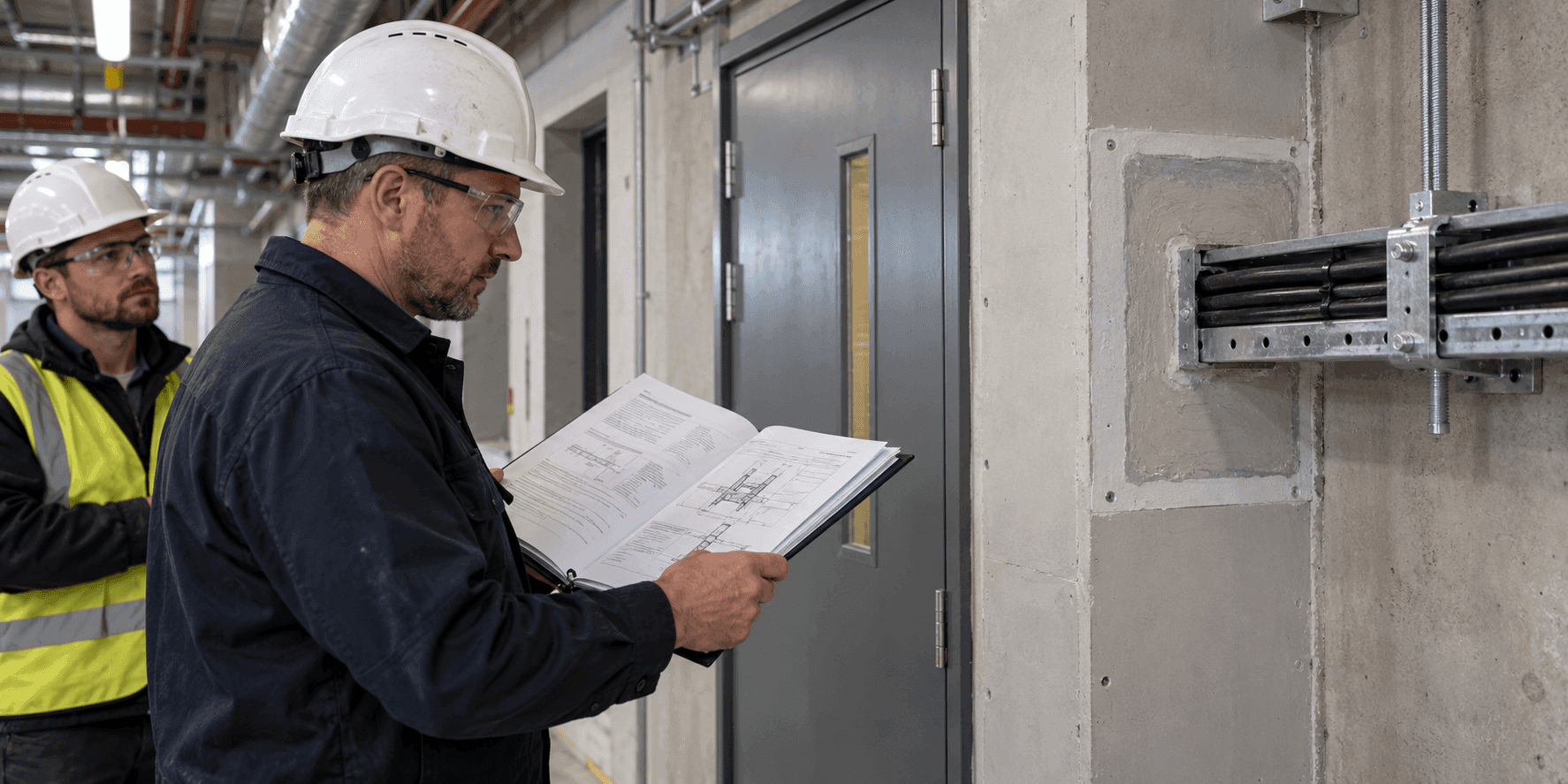
For a doorset, resistance depends on the interaction between the leaf, frame, hinges, locking arrangement, glazing where present, fixings and supporting construction.
A tested lock does not establish the resistance of the door around it. Likewise, a reinforced leaf cannot compensate automatically for an unsuitable frame or weak anchorage.
Review the evidence against the proposed dimensions, opening direction, hardware and installation detail. Changes to any of these may require confirmation that the configuration remains covered.
The same principle applies to secure vault enclosure systems. The enclosure needs a coordinated boundary, including its access opening, joints and interfaces. Its suitability cannot be established by considering one panel or component in isolation.
Check the Surrounding Construction
The protected opening sits within a larger security boundary. Adjacent walls, glazing, ceilings, service openings and structural junctions need consideration alongside the door.
Frame anchors transfer forces into the supporting substrate. Their suitability depends on the wall construction, embedment, spacing, edge distances and installation conditions covered by the design and evidence.
An existing wall may need investigation before a security doorset can be specified confidently. Drawings alone may not establish its construction or condition.
Responsibility for these interfaces should be clear. Otherwise, the door supplier, wall contractor and installer may each assume that another party has resolved the connection.
Connect Resistance With Detection and Response
Physical barriers provide time that the wider security arrangements must use effectively. Detection, alarm assessment, communication and intervention all affect the outcome.
NPSA guidance links physical delay with intrusion detection and the opportunity for a response before barriers are breached. npsa.gov.uk For a project team, this means evaluating the barrier within the operational sequence.
When is an attack detected? Who verifies the alarm? What action follows, and how long does it take?
Coordinated security systems should address these relationships. Nominal resistance times should not simply be added together without considering the detection point, route and applicable evidence.
Maintain the Specified Configuration
A secure assembly must remain usable for authorised access and any applicable emergency escape requirements.
Access-control hardware, locking changes and replacement components need review against the approved configuration. A convenient site substitution can alter the arrangement on which the resistance evidence depends.
Inspection should cover frame condition, fixings, hinges, locks, clearances and unauthorised modifications. Records should identify the installed assembly and support controlled maintenance.
The useful specification is one that connects a defined threat to applicable assembly evidence, a suitable installation and a credible operational response. That gives forced-entry resistance a measurable purpose within the facility’s security strategy.