
What Is a Four-Hour Fire Barrier?
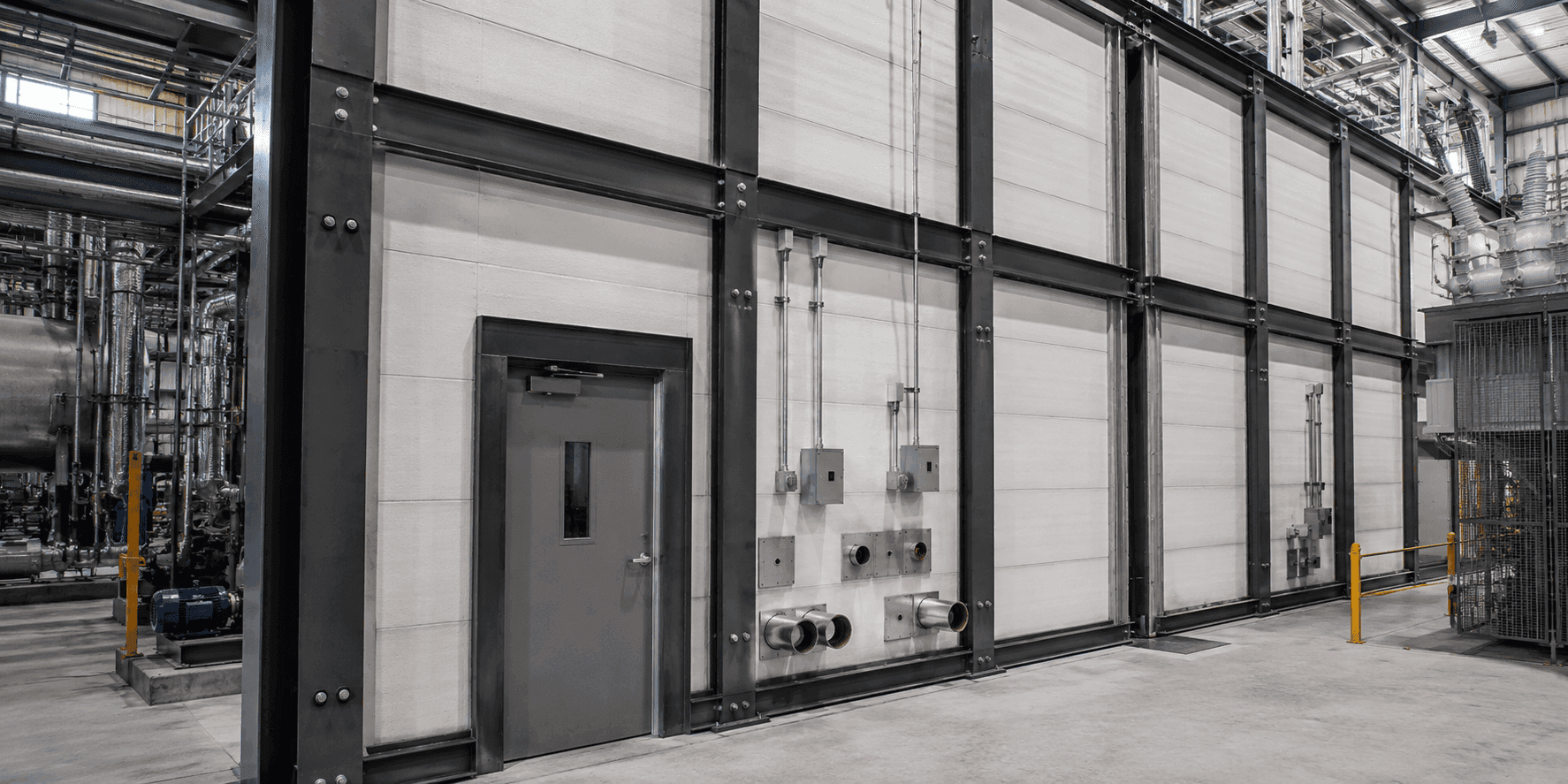
A four-hour fire barrier is a complete wall or barrier system classified to meet defined fire-resistance criteria for four hours under specified test conditions. The rating applies only within the system's documented configuration and field of application.
What Does a Four-Hour Fire Barrier Mean?
A four-hour fire barrier is not simply a thicker wall or a panel described as fireproof. It is an assembly for which relevant test, classification or assessment evidence supports a four-hour fire-resistance period against stated criteria.
The evidence may address integrity, insulation, loadbearing capacity or another defined function depending on the barrier and method. Project teams must identify which criteria are required by the fire strategy and whether the proposed arrangement matches the evidence.
High-duration ratings can be relevant where hazards, separation objectives or consequences justify them, but a longer rating should not be selected automatically. Suitability also depends on fire exposure, dimensions, structural support, movement, openings, access, environmental conditions and coordination with adjoining systems.
- Defined duration: Four hours refers to the stated classification period under the applicable test conditions.
- Specified criteria: The required integrity, insulation or loadbearing functions must be identified.
- Complete system: Panels, framing, supports, fixings, joints and edges form the rated assembly.
- Controlled openings: Doors, ducts, cables and pipes require compatible protection and evidence.
- Project qualification: Dimensions, exposure, environment and interfaces must remain within supported scope.
What Must Be Confirmed for a Four-Hour Barrier
- Rating: Four-hour classification against stated criteria. Not an absolute guarantee for every real fire scenario.
- Assembly: Complete configuration represented by evidence. Not a property that transfers from one material to any wall.
- Openings: Permitted doors and penetrations with appropriate details. Not arbitrary site openings sealed without review.
- Support: Defined frame, substrate, restraint and movement details. Not any available structure or fixing arrangement.
- Application: Project need established by fire strategy and risk. Not automatically necessary because a longer duration sounds safer.
When Might a Project Require a Four-Hour Barrier?
The requirement should come from the project fire strategy, hazard assessment and applicable design obligations.
- Separation of significant hazards: A longer-duration boundary may be considered where escalation consequences are high.
- Protection of critical equipment: Selected assets or services may require separation aligned with continuity objectives.
- Industrial compartmentation: Large or complex facilities may define high-duration compartment boundaries.
- Infrastructure interfaces: Transport, energy or utility assets may require robust separation around particular risks.
- Regulatory or client criteria: Project documents may specify a duration that must be supported by applicable evidence.
Why the Four-Hour Label Is Not Enough
The rating can be undermined when the project focuses on duration and overlooks the installed boundary.
- Wrong criteria: Evidence supports a duration but not the function required by the design.
- Unsupported height or span: The proposed dimensions exceed the permitted application.
- Unqualified openings: Doors or services are added without compatible evidence.
- Movement and deflection: Structural behaviour is not coordinated with head joints and connections.
- Unreviewed environment: Corrosion, moisture, impact or operational exposure affects material and detail selection.
What a Properly Qualified Barrier Supports
The barrier's contribution depends on continuity and alignment with the wider fire and operational strategy.
- Defined separation: Supports a specified high-duration compartment boundary.
- Asset protection planning: Can form part of measures for selected critical rooms or equipment.
- Controlled interfaces: Requires openings, supports and adjoining systems to be planned together.
- Evidence-led acceptance: Gives reviewers a configuration against which installation can be checked.
Questions Before Specifying a Four-Hour Barrier
The project should establish need and evidence before committing to a system.
- Why is four hours required?: Trace the duration to the fire strategy, hazard or project requirement.
- Which criteria must be met?: Confirm integrity, insulation, loadbearing or other functions.
- Does the configuration match evidence?: Review dimensions, supports, orientation, joints and fixings.
- How are openings protected?: Coordinate every door, service and maintenance requirement.
- Who approves departures?: Define the technical route for changes and site constraints.
How Invicta ANARA Supports Systems-Level Infrastructure Delivery
SECURA by Invicta ANARA includes fire-protection systems described in approved brand sources as available in configurations up to four hours. Any four-hour claim must be confirmed against the specific tested or assessed system, required criteria and project arrangement before publication or selection.
SECURA by Invicta ANARA. Explore critical containment and protection systems for relevant fire and infrastructure risks.
Fire protection systems. Review Invicta ANARA fire-protection capabilities and related applications.
Industrial fire compartmentation walls. Explore compartmentation walls planned around complete assemblies and project interfaces.
Frequently Asked Questions
Direct answers to common questions about 4 hour fire barrier.
What is a 4 hour fire barrier?
It is a complete barrier assembly supported by evidence for four hours against defined fire-resistance criteria under specified conditions.
Does every four-hour barrier provide insulation?
Not necessarily. The classification must be checked to identify which criteria were achieved.
Where are four-hour barriers used?
Use depends on the fire strategy, hazards, asset type and applicable project requirements.
Can services pass through the barrier?
Only with opening systems and details appropriate to the boundary and supported by relevant evidence.
Is a four-hour barrier always better?
No. The correct system is the one that meets the defined requirement and interfaces without unsupported assumptions.
Share the required criteria, barrier dimensions, supports and openings so the applicable four-hour system evidence can be reviewed. Discuss an Infrastructure Requirement.