
What Is a Cellulosic Fire Curve?
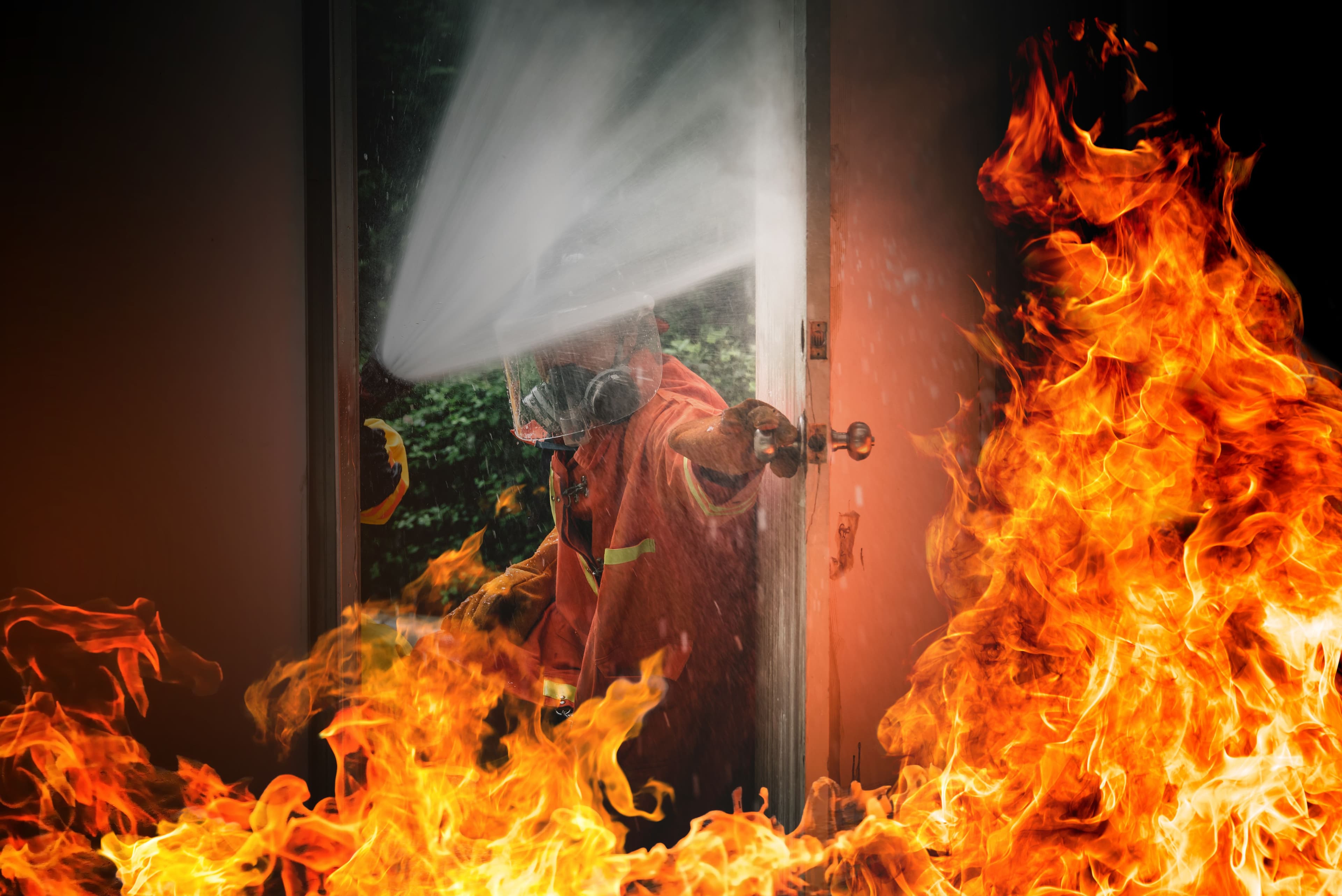
A cellulosic fire curve is a standardised time-temperature exposure used to evaluate fire-resisting systems against a defined heating regime associated broadly with combustible building contents. It supports comparison but does not reproduce every real fire.
What Does a Cellulosic Fire Curve Represent?
A cellulosic fire curve defines how furnace temperature increases with time during a specified fire-resistance test. It is commonly associated with fires involving materials such as timber, paper, textiles, furnishings and other ordinary combustible contents found in buildings and infrastructure spaces.
The curve gives laboratories a repeatable exposure so systems can be evaluated against defined criteria. Depending on the element and test method, those criteria may include integrity, insulation and loadbearing capacity. The resulting classification applies to the tested or assessed configuration and its permitted field of application.
The curve is a test convention, not a forecast of the exact temperature history in a particular room. Real fire development is affected by fuel, ventilation, geometry, suppression, heat loss and intervention. Selecting the curve is therefore one part of establishing the correct fire-protection requirement.
- Time-temperature relationship: Defines a repeatable furnace exposure that increases according to the applicable test method.
- Relevant fuel context: Broadly reflects fires involving ordinary combustible building contents rather than rapidly burning hydrocarbon fuels.
- System evaluation: Allows complete walls, floors, doors, ducts or protected elements to be assessed under controlled conditions.
- Performance criteria: Results may address integrity, insulation, loadbearing capacity or other functions defined by the method.
- Configuration limits: Classification remains linked to dimensions, supports, joints, openings, orientation and other documented details.
- Project interpretation: The fire strategy must confirm whether this exposure and the achieved criteria suit the actual hazard.
What the Cellulosic Fire Curve Does—and Does Not Do
- Exposure: Provides a standard time-temperature heating regime. Does not recreate every possible building fire.
- Comparison: Allows systems tested by the same method to be interpreted consistently. Does not make systems interchangeable.
- Duration: Records how long stated criteria were satisfied in the test. Does not predict an exact failure minute in a real incident.
- Application: Supports selection where the project exposure aligns with the method. Does not replace hazard assessment or fire strategy.
- Evidence: Applies to the complete documented configuration. Does not transfer automatically to modified assemblies.
How a Cellulosic Fire Test Is Used
Testing connects the defined furnace exposure with measurements and observations for the complete specimen.
- Prepare the specimen: Build the wall, floor, door or protected element in the configuration required by the method.
- Apply the exposure: Control furnace conditions against the specified time-temperature curve.
- Measure relevant criteria: Monitor temperatures, integrity, deformation or loadbearing behaviour as applicable.
- Record system behaviour: Document joints, fixings, supports and other details that influence the result.
- Classify the outcome: State achieved criteria and duration within the applicable rules.
- Define permitted application: Identify configuration limits and supported variations for project use.
Why Curve Selection Must Match the Hazard
A fire-resistance duration has meaning only when the exposure, criteria and system configuration are appropriate to the project.
- Wrong fire scenario: A cellulosic exposure is assumed where another credible hazard governs.
- Duration-only specification: The requirement names minutes but omits integrity, insulation or structural functions.
- Material-only assumption: A component is described as rated without complete assembly evidence.
- Unreviewed openings: Doors, ducts and services change the boundary represented by the evidence.
- Unsupported field change: Dimensions, supports, joints or orientation differ from the documented system.
Why Standardised Fire Curves Are Useful
A standard curve provides a consistent basis for testing when it is interpreted within its defined scope.
- Repeatable exposure: Laboratories follow a defined heating regime rather than an arbitrary fire.
- Comparable evidence: Reviewers can interpret results produced under the same applicable method.
- Defined criteria: Performance is expressed against stated functions and duration.
- Specification basis: Project teams can connect required evidence to the relevant fire strategy.
Questions Before Selecting a Cellulosic-Rated System
Project teams should look beyond the curve name and rating duration.
- Is the exposure appropriate?: Confirm the credible fuel and fire scenario through the project fire strategy.
- Which criteria are required?: Identify integrity, insulation, loadbearing or other relevant functions.
- What configuration was evaluated?: Review supports, dimensions, joints, openings and exposure direction.
- What variations are permitted?: Check the documented field of application and limitations.
- How will installation be verified?: Connect approved details, inspection points and change control.
How Invicta ANARA Supports Systems-Level Infrastructure Delivery
SECURA by Invicta ANARA includes relevant cellulosic fire-protection and compartmentation systems. Any fire-resistance statement must be confirmed against the applicable exposure, complete configuration, supporting evidence and project-specific requirements.
SECURA by Invicta ANARA. Explore critical containment and protection systems for relevant fire and infrastructure risks.
Cellulosic fire protection. Review Invicta ANARA systems for relevant cellulosic-fire requirements and applications.
Industrial fire compartmentation walls. Explore compartmentation walls planned around complete assemblies and project interfaces.
Frequently Asked Questions
Direct answers to common questions about cellulosic fire curve.
What is a cellulosic fire curve?
It is a standard time-temperature exposure used in fire-resistance testing for hazards broadly associated with ordinary combustible building contents.
Does the curve describe every building fire?
No. It is a repeatable test convention; real fires vary with fuel, ventilation, geometry, suppression and intervention.
Is a cellulosic fire the same as a hydrocarbon fire?
No. The exposures represent different heating regimes and hazard contexts, so evidence should not be treated as interchangeable.
What does a cellulosic fire rating apply to?
It applies to the complete tested or assessed system within its documented configuration and field of application.
How is the correct fire curve selected?
Selection should follow the project fire strategy, credible fuels, operating context and applicable design requirements.
Share the fire scenario, required criteria and proposed system configuration so relevant cellulosic fire-protection evidence can be reviewed. Discuss an Infrastructure Requirement.