RWS, HCinc and Hydrocarbon Fire Curves in Tunnels
RWS, HCinc and Hydrocarbon Fire Curves in Tunnels
A tunnel protection submission states “120-minute fire resistance”. Before reviewing the proposed thickness or fixing arrangement, one question needs answering: under which fire exposure?
A system assessed against a standard building-fire curve has not demonstrated the same performance as one assessed against RWS or an increased hydrocarbon curve. Even two tunnel-specific results may address different exposures and acceptance criteria.
The curve defines an important part of the test conditions. It must be read alongside the duration, specimen construction and required outcome.
What Does a Fire Curve Represent?
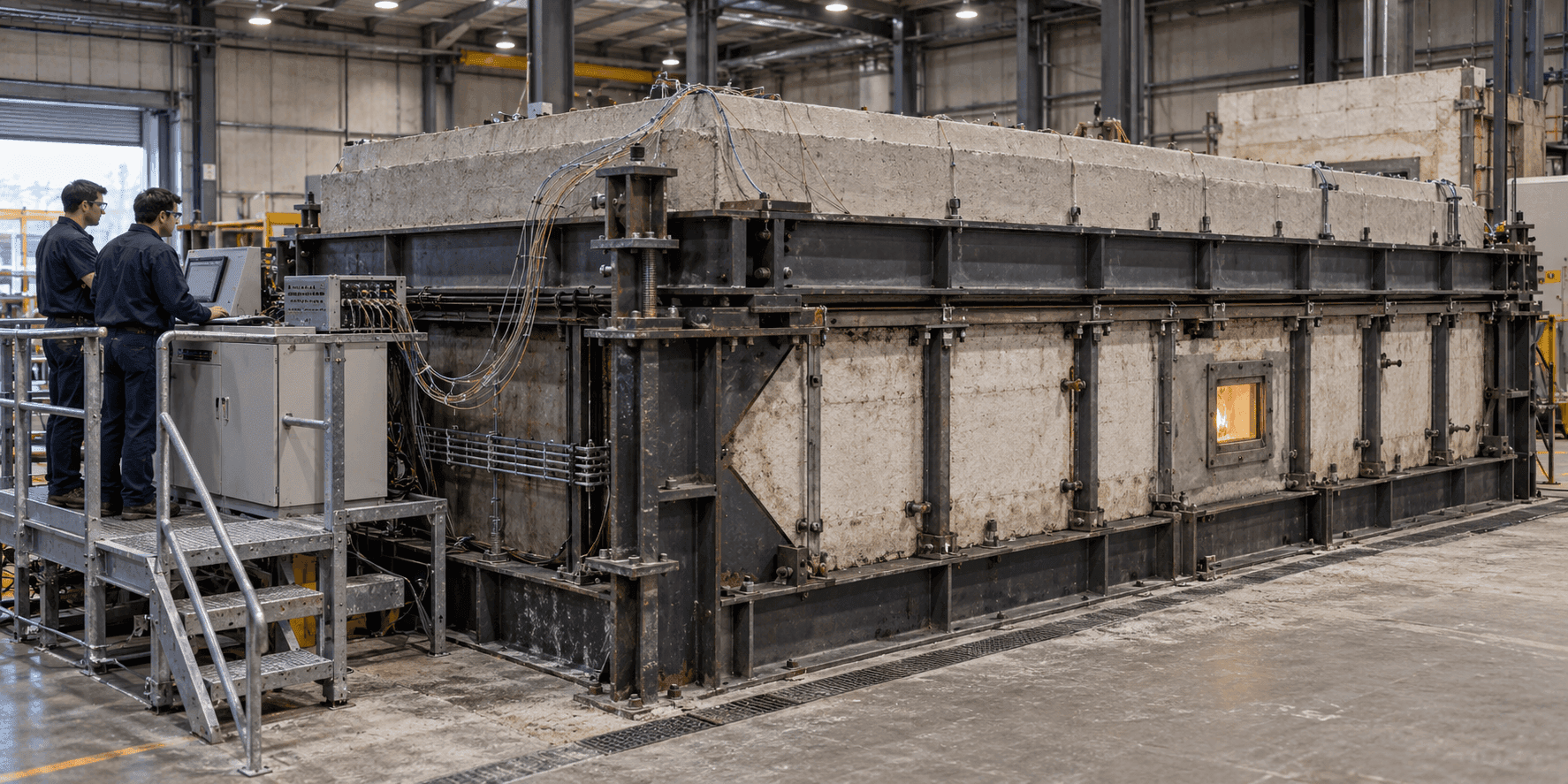
A temperature–time curve specifies how the test environment changes during exposure. It provides a repeatable basis for testing or thermal assessment.
It does not describe every feature of a real tunnel fire. Vehicle type, fuel distribution, ventilation, fire location and tunnel geometry still influence the actual incident.
Also distinguish a temperature–time curve from a heat-release-rate design fire. The former describes thermal exposure; the latter describes the rate at which a fire releases energy.
These inputs serve different purposes within structural, smoke-control and evacuation assessments. A temperature curve alone cannot establish smoke production or tenability.
The Hydrocarbon Curve
The hydrocarbon, or HC, curve represents rapid heating associated with hydrocarbon fire exposure. Its temperature rises much faster initially than the standard cellulosic curve.
That difference matters when assessing how quickly a substrate heats and how the protective system responds.
For hydrocarbon fire protection, however, specifying “HC tested” remains incomplete. Identify the test procedure, duration, acceptance criteria and construction covered.
A hydrocarbon furnace exposure also does not automatically establish resistance to the mechanical and erosive effects of jet impingement.
The Increased Hydrocarbon Curve: HCinc
HCinc represents an increased hydrocarbon exposure. PIARC describes it as a modified HC curve using a temperature multiplier of 1300/1100, producing a higher thermal exposure than the basic curve.
The implication for specification is more useful than the label alone: evidence under basic HC conditions should not automatically be accepted for an HCinc requirement.
Check the exact curve designation and its referenced definition. Abbreviations in schedules, drawings and supplier literature need to identify the same exposure.
A description such as “enhanced hydrocarbon” should be clarified before approval.
The RWS Curve
The RWS curve is a Dutch tunnel-fire exposure with rapid initial heating, a high-temperature peak and a subsequent decline within its defined profile.
Its shape differs from HC and HCinc. The comparison therefore involves the full temperature history rather than only the maximum temperature.
PIARC presents RWS alongside HCinc and other curves when discussing structural fire resistance in tunnels. Their inclusion as separate exposures reinforces the need to specify the selected curve explicitly.
Do not assume that matching a peak temperature, or achieving a longer duration under another curve, establishes equivalence.
Select the Curve Through the Design Basis
The applicable authority, tunnel owner’s requirements and project fire assessment should establish the required exposure.
Consider the permitted traffic or rolling stock, credible fire loads, tunnel configuration and consequences of structural damage. Road-tunnel assumptions should not automatically be transferred to rail or service tunnels.
For tunnel fire protection systems, record the selected curve, exposure duration and any required cooling-phase assessment.
The specification must also define acceptable temperatures, spalling behaviour, structural performance or separation criteria, as applicable. The curve supplies the exposure; it does not supply every acceptance criterion.
Review the Complete Test Arrangement
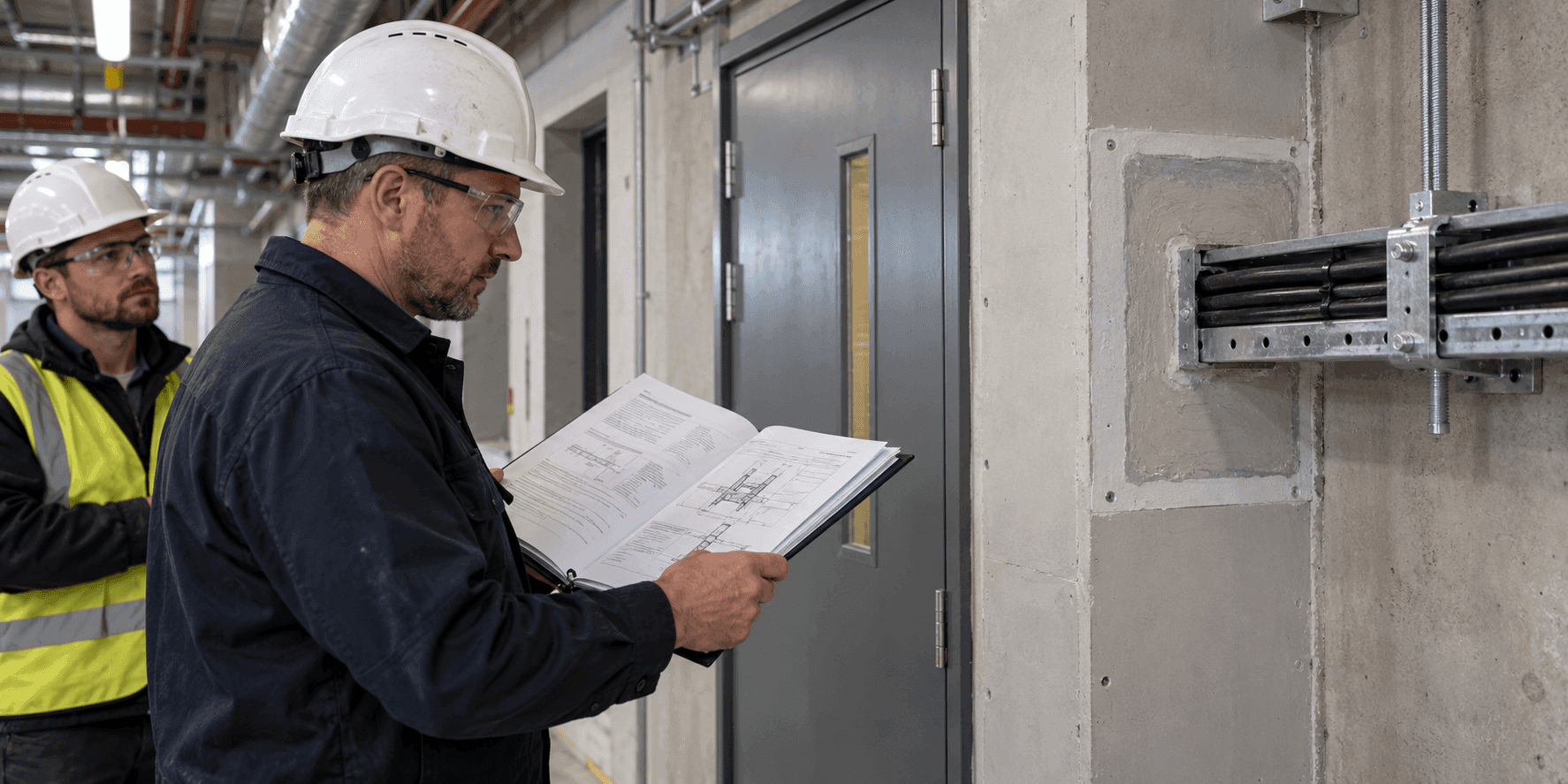
Once the exposure aligns, compare the proposed installation with the tested or assessed construction.
For a protected concrete lining, relevant details may include concrete properties, moisture condition, loading, protection thickness, joints, anchors and orientation. A result from one substrate or fixing arrangement needs an appropriate basis before application to another.
Doors, barriers and service enclosures require their own review. Evidence for tunnel lining protection does not automatically establish their performance.
Likewise, a fire-rated cable protection system needs evidence addressing its installation and required circuit function. Surviving the specified furnace exposure is only useful when the acceptance criteria match the duty.
Make the Requirement Unambiguous
A clear specification identifies the curve and reference procedure, duration, performance criteria, assembly details and application limits.
Require submissions to explain deviations and provide supporting evidence before installation. Retain the approved configuration for inspection and later modifications.
“Two-hour tunnel fire protection” leaves too much unresolved. Engineers need to know what exposure the system faced, what it achieved and whether that evidence covers the construction being installed.