Fire Protection for Offshore and Marine Energy Assets
Fire Protection for Offshore and Marine Energy Assets
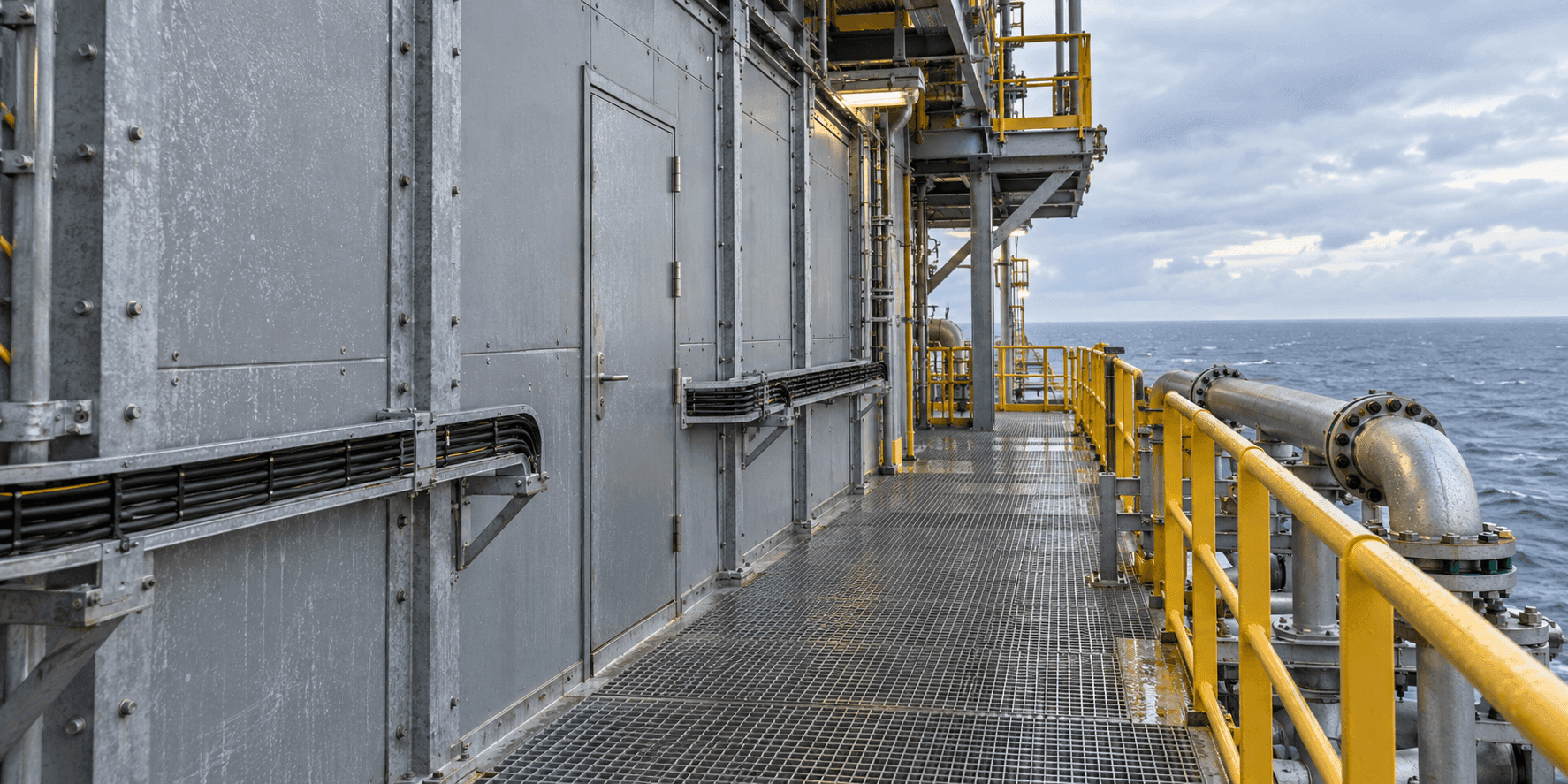
On an offshore installation, a process module, emergency cable route and accommodation boundary may sit within a tightly constrained layout. A fire can threaten several functions at once, while evacuation and intervention depend on systems that must remain available.
Protection also has to survive years of salt-laden moisture, vibration and maintenance activity before it encounters fire.
The design problem therefore has two parts: establish what the protection must achieve during the incident, then ensure the installed system can retain that capability throughout service.
Establish the Asset’s Design Basis
A fixed platform, floating production unit and marine energy terminal should not automatically share the same fire-protection specification. Their inventories, layouts, structural arrangements and approval requirements differ.
Confirm the applicable regulatory, classification and project requirements before selecting systems. Then identify credible release locations, fuels, pressures and exposure durations.
Pool-fire exposure, jet impingement and fires within enclosed machinery spaces require appropriate assessment. “Offshore suitable” is not a substitute for a defined fire duty.
Where relevant, the design must also consider explosion loading and whether protection needs to remain effective during a subsequent fire.
Protect Functions as Well as Boundaries
The protection objective might involve preserving structural capacity, maintaining separation or supporting emergency shutdown and evacuation.
These objectives require different acceptance criteria. A structural member needs an appropriate load-bearing assessment. A division may require integrity and insulation. Equipment needed during an emergency requires consideration of its operating limits and dependencies.
Norway’s offshore regulator, Havtil, explicitly identifies load capacity, integrity and insulation as relevant properties when designing passive fire protection for structures and equipment.
For hydrocarbon fire protection, document the protected function and required duration. Avoid assuming that a barrier rating demonstrates the continued operation of equipment behind it.
Match Fire Evidence to the Assembly
Review what was tested and how the proposed arrangement compares.
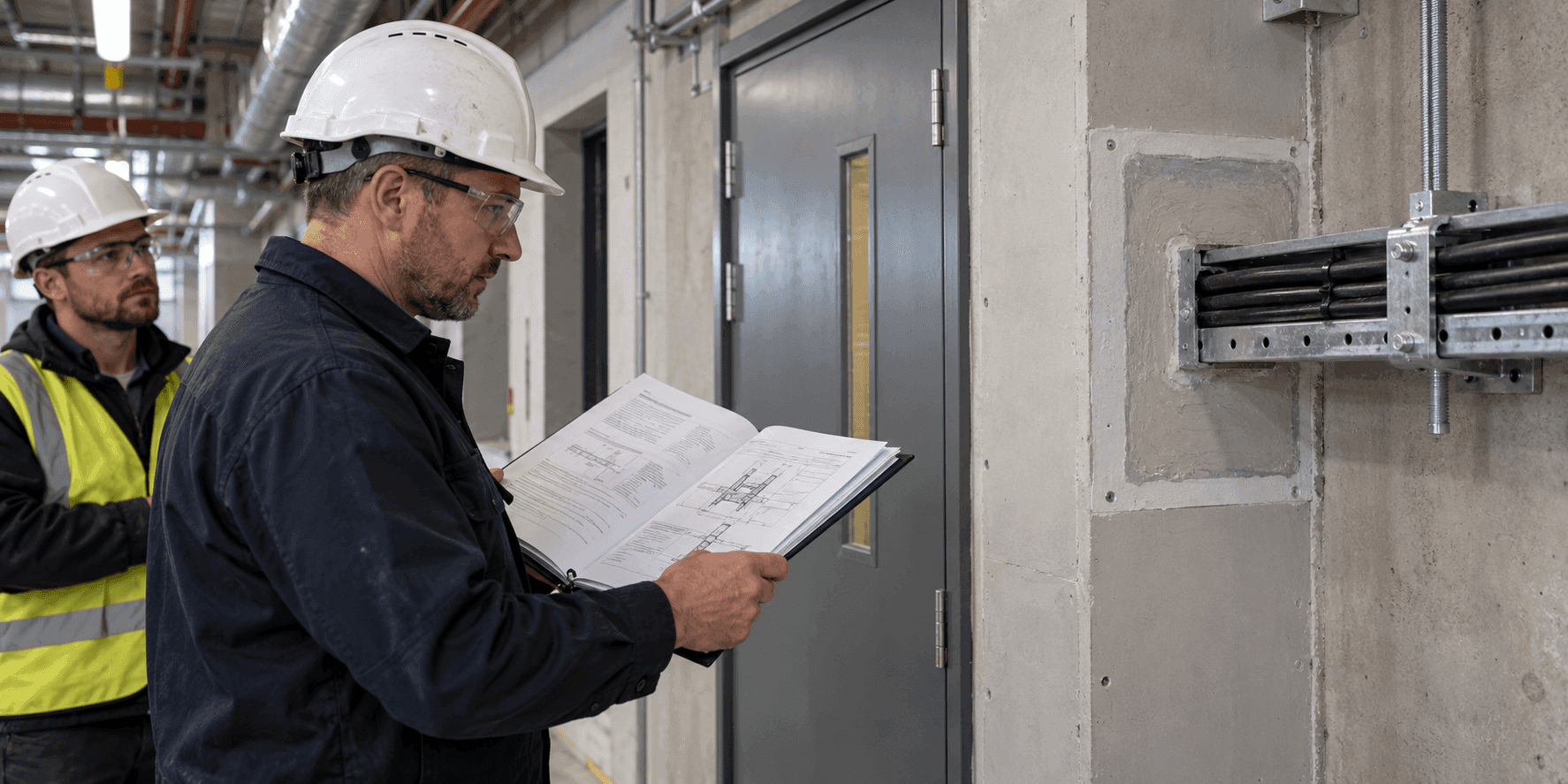
Check the substrate, orientation, dimensions, thickness, support arrangement, joints and fixings. For enclosures, include access covers, cable entries, ventilation openings and connections to adjacent construction.
Jet-fire evidence deserves particular attention where directional flame impingement is credible. ISO 22899-1 assesses performance under specified jet-fire conditions; it does not also establish weathering, ageing, impact or explosion resistance.
Those properties need separate consideration. A successful fire test cannot resolve every demand associated with marine service.
Coordinate Weight, Movement and Interfaces
Offshore modifications often face limits on available space, structural capacity and installation access. Include protection weight, framing and maintenance loads in the structural review.
Floating assets introduce movement considerations that need coordination with the supporting structure. Vibration, thermal movement and relative displacement at connections should be addressed through defined details.
For fire barrier systems, continuity depends on perimeter joints and penetrations as well as the main panels. A service passing through a division may move differently from the division itself.
Where offshore blast protection is required, assess connections and supports for the specified loading. Combined performance needs evidence appropriate to the required sequence.
Design Against Environmental Deterioration
Salt deposits, water ingress and damaged protective finishes can affect both the protection and its substrate. Details that trap moisture may also make deterioration difficult to detect.
Specify compatible substrate preparation, corrosion protection and finishes. Resolve drainage, exposed edges, dissimilar-metal interfaces and access for inspection.
Durability should be assessed for the actual location. A sheltered internal enclosure and an exposed external barrier may face different conditions on the same asset.
Installation records should capture concealed work before closure. Without that baseline, later inspections may struggle to distinguish an approved detail from deterioration or an undocumented repair.
Preserve Access to Critical Systems
Protection should accommodate the maintenance needed to keep safety functions reliable.
A fire-rated cable enclosure system needs accessible inspection points and controlled arrangements for adding or replacing cables. Equipment protection may need removable sections without compromising joints during reinstatement.
Define how components are removed, stored, checked and refitted. Offshore access restrictions make these procedures particularly important: a detail that is difficult to reinstate is vulnerable to incomplete repairs.
Changes to equipment, cable routing or process conditions should trigger review of the associated protection.
Specify for the Whole Service Life
Before approval, establish the fire scenario, protected function, performance criteria and applicable evidence. Resolve structural connections, penetrations, environmental suitability and maintenance access together.
At handover, retain approved drawings, installation records and inspection requirements. Define how damage and later modifications will be assessed.
Offshore fire protection earns its value through dependable installed performance. That depends on matching the fire duty while making deterioration visible and maintenance achievable throughout the asset’s life.