Hydrocarbon Fire Protection for Refineries and Petrochemical Plants
Hydrocarbon Fire Protection for Refineries and Petrochemical Plants
A new fire barrier may fit between two process units yet clash with a maintenance lifting route. Protection around a valve may suit the fire exposure but obstruct inspection. A service penetration introduced during a turnaround may undermine an otherwise continuous separation.
These are normal design problems in refineries and petrochemical plants. Passive fire protection must accommodate interconnected equipment, pressurised inventories, dense service routes and continuing modifications.
An effective specification connects the process hazard to the required protection, then resolves how that protection will work within the operating facility.
Define the Hazard Before the Protection
Begin with the hydrocarbons, operating conditions and credible release locations. Consider how inventory, pressure, temperature, drainage and isolation arrangements influence the potential fire.
A liquid release may accumulate and burn beneath equipment. A pressurised release may produce directional flame impingement. These scenarios impose different demands and require appropriate evidence.
HSE’s process-industry guidance links passive fire protection selection to defined performance criteria and tests representing the fire conditions likely to occur.
Record the exposure assumptions in the design basis. Describing an area simply as “hydrocarbon service” does not establish the duty of every protective system within it.
Decide What Must Be Preserved
The protection objective should identify an asset and a consequence.
Structural supports may need to retain load-bearing capacity. A barrier may need to maintain separation between process areas. A valve actuator may need to complete an isolation action, while its associated cables or utilities remain available.
These duties need different acceptance criteria. Barrier integrity does not automatically demonstrate equipment operability, and equipment protection does not establish structural stability.
For refinery fire protection, define what must remain stable, intact or functional, and for how long. Connect that duration to the assessed exposure and emergency-response assumptions.
Translate the Objective Into a Specification
A practical specification should establish:
- The credible fire exposure and required duration.
- The protected asset and consequence of failure.
- The applicable thermal, structural or functional limits.
- The test or assessment route supporting the proposed arrangement.
- The installation, inspection and maintenance requirements.
Different evidence serves different purposes. UL 1709 addresses rapid-rise fire testing of protection for structural steel; the ISO 22899 series addresses jet-fire resistance. Neither should be treated as universal approval for unrelated assemblies or duties.
Check the actual configuration covered: substrate, geometry, thickness, supports, joints, fixings and openings. Where the installation varies, establish the technical basis for accepting that variation before procurement.
Resolve Interfaces Before Installation
Pipework, cable trays, conveyors and access openings often determine whether the protection can be installed continuously.
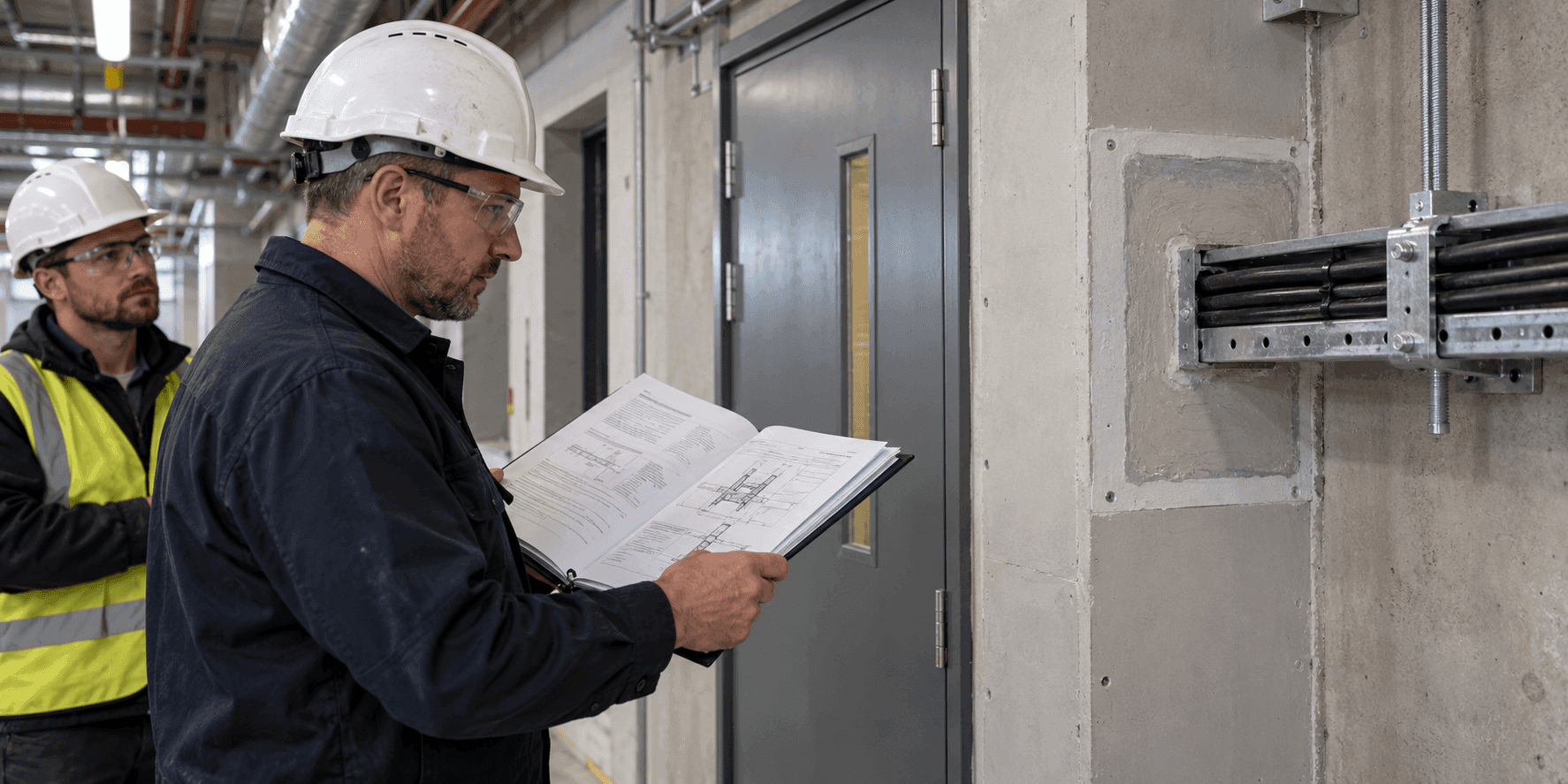
For fire compartmentation walls, coordinate penetrations and perimeter connections alongside the barrier itself. Identify who designs each interface and who verifies it on site.
Movement also needs consideration. Equipment vibration, pipe movement and structural deflection should not be transferred into a penetration detail without assessment.
Review maintenance envelopes at the same stage. Removable panels need defined connections and reinstatement procedures; access doors need compatible evidence. Leaving these decisions to installation can produce details that the original fire assessment does not cover.
Sadara: Compartmentation Around the Process
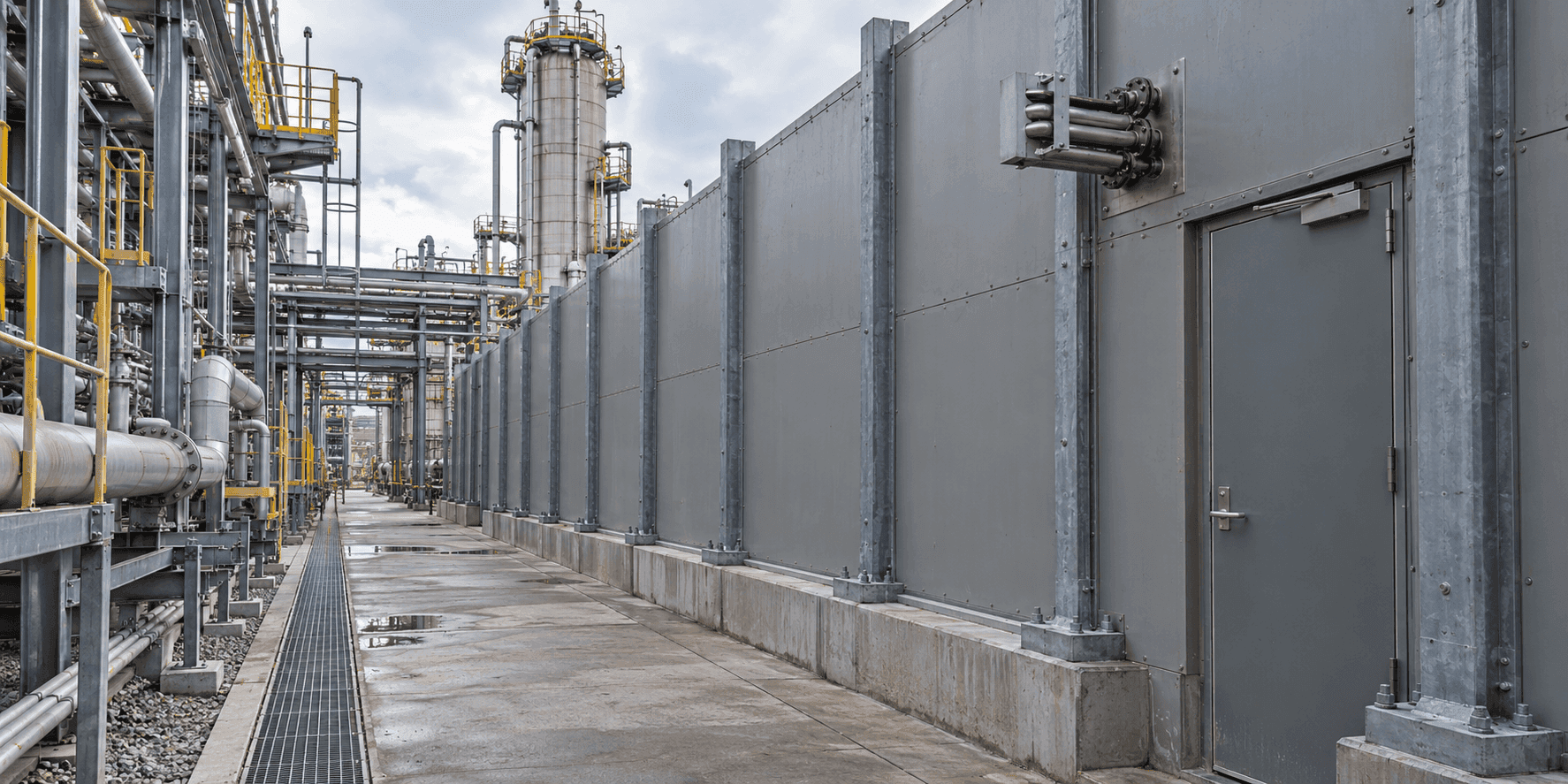
At the Sadara Chemical Complex in Saudi Arabia, Durasteel barriers covered more than 6,500 m², with barrier heights exceeding 16 m. The installation incorporated multiple service penetrations requiring fire sealing appropriate to their type.
The engineering lesson is the relationship between separation and process infrastructure. Large barriers must accommodate services and structural interfaces while preserving the intended fire boundary.
A panel specification alone cannot resolve those connections.
Design for Environmental Exposure and Intervention
Refinery protection may face moisture, chemicals, corrosion, weather, vibration and mechanical damage throughout its service life.
Specify environmental suitability separately from fire performance. Include compatible coatings, drainage details where relevant, inspection access and repair procedures.
Where a barrier also requires hydrocarbon blast protection, define the loading and any required blast-followed-by-fire sequence. A fire rating alone does not establish blast resistance.
Maintenance arrangements should preserve the approved configuration. Replaced components, new penetrations and altered equipment layouts require review against the original design assumptions.
Keep the Design Basis Live
Before handover, retain the applicable evidence, approved drawings, interface details and inspection criteria. Confirm that the installed arrangement corresponds to those records.
During operation, use management of change to identify when process conditions or physical alterations affect protection requirements.
Hydrocarbon fire protection remains effective when the hazard assessment, specified system and installed condition continue to agree. That relationship needs maintaining through every turnaround and modification.