Why Oil and Gas Facilities Need Hydrocarbon-Rated Barriers
Why Oil and Gas Facilities Need Hydrocarbon-Rated Barriers
A fire at one pump can threaten more than the equipment where the release occurred. Nearby pipework, structural supports and control systems may become exposed, creating opportunities for further loss of containment or disruption to shutdown functions.
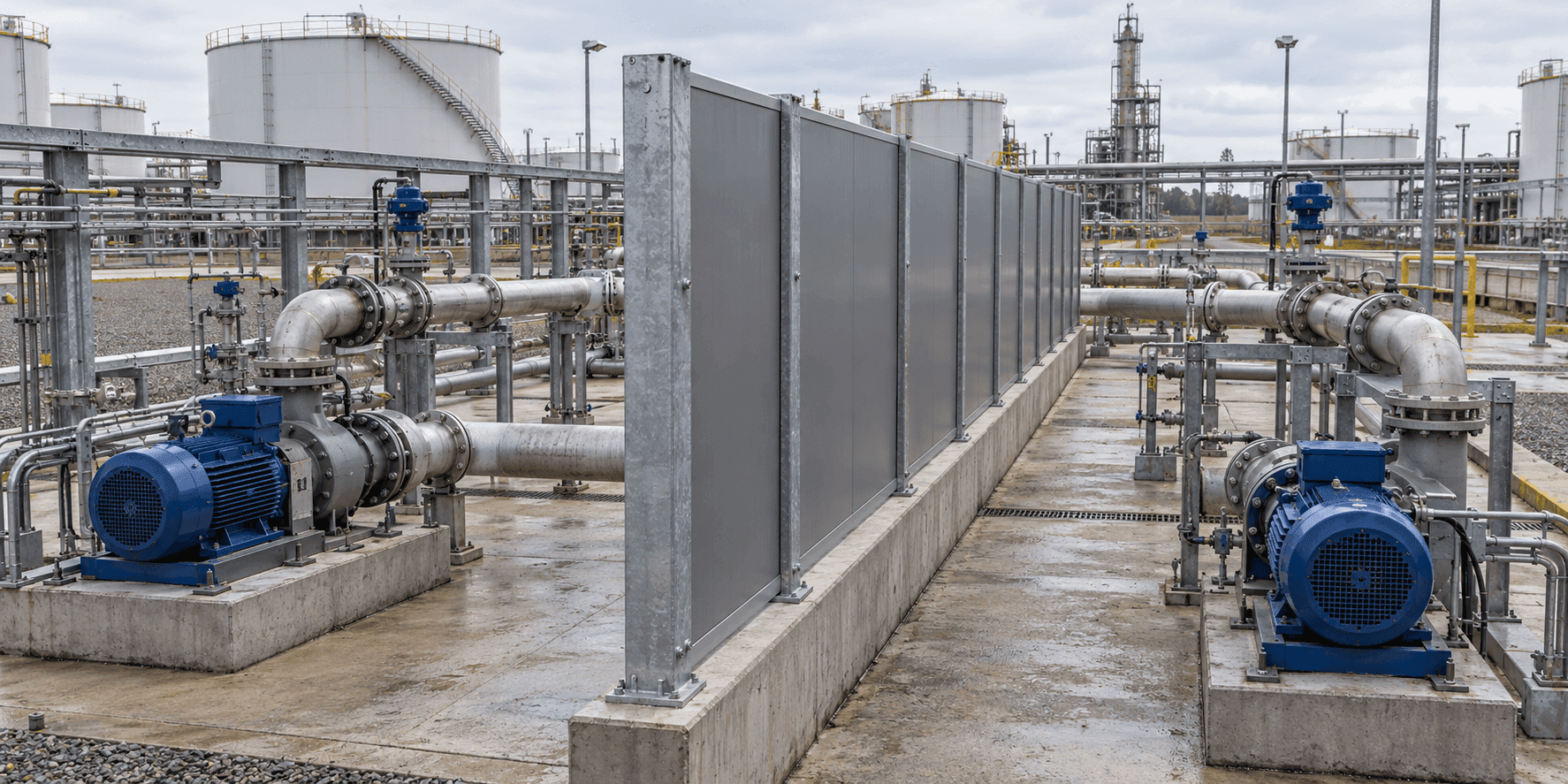
In a closely arranged process facility, separation therefore has an engineering purpose: interrupting a credible escalation path. Hydrocarbon-rated barriers can support that objective, provided their exposure basis, dimensions and installation details suit the hazard.
The decision starts with what needs separating and why.
Define the Escalation Path
Before drawing a barrier, identify the potential release source, exposed equipment and consequence of failure. A wall between two assets is useful only if its position and performance address the relevant exposure.
HSE identifies fire walls as a means of limiting fire spread and protecting adjacent equipment from thermal radiation in process and storage areas.
For a particular installation, the objective might be to reduce exposure of a neighbouring pump, separate process areas or protect equipment needed during an emergency. Each objective leads to different requirements for barrier height, length, thermal performance and continuity.
A barrier should therefore follow the hazard assessment rather than simply occupy the available space.
Specify More Than a Duration
“Two-hour hydrocarbon barrier” leaves several questions unanswered. Which exposure does the evidence represent? What performance criteria were achieved? What construction and support arrangement were assessed?
Integrity concerns the passage of flames and hot gases. Insulation concerns temperature rise on the unexposed face. Radiation performance, where relevant, needs its own defined criteria.
These distinctions matter when equipment sits close behind a barrier. Maintaining integrity does not, by itself, establish that a temperature-sensitive actuator or cable remains functional.
The hydrocarbon fire protection specification should connect the required barrier performance to the vulnerability of the protected asset.
Match the Evidence to the Exposure
A liquid release collecting beneath equipment presents a different design problem from a pressurised release directed towards the barrier. Pool-fire exposure and jet impingement should not be treated as interchangeable.
Check whether the evidence addresses the credible thermal exposure and any mechanical demands associated with it. A furnace result alone does not establish resistance to jet-fire erosion.
Likewise, a cellulosic fire rating cannot automatically be transferred to a hydrocarbon exposure. The heating regime, acceptance criteria and application limits need review.
The useful question is whether the proposed assembly has appropriate evidence for the specified duty, including its joints, supports and openings.
Check Height, Ends and Openings
A barrier panel can perform as intended while the overall separation remains inadequate. Flames or radiation may reach the protected asset around an end, above the wall or through an opening.
Review the barrier geometry against the release location, potential flame envelope and position of vulnerable equipment. Its relationship with drainage also matters: liquid should not be assumed to remain on one side merely because a wall is present.
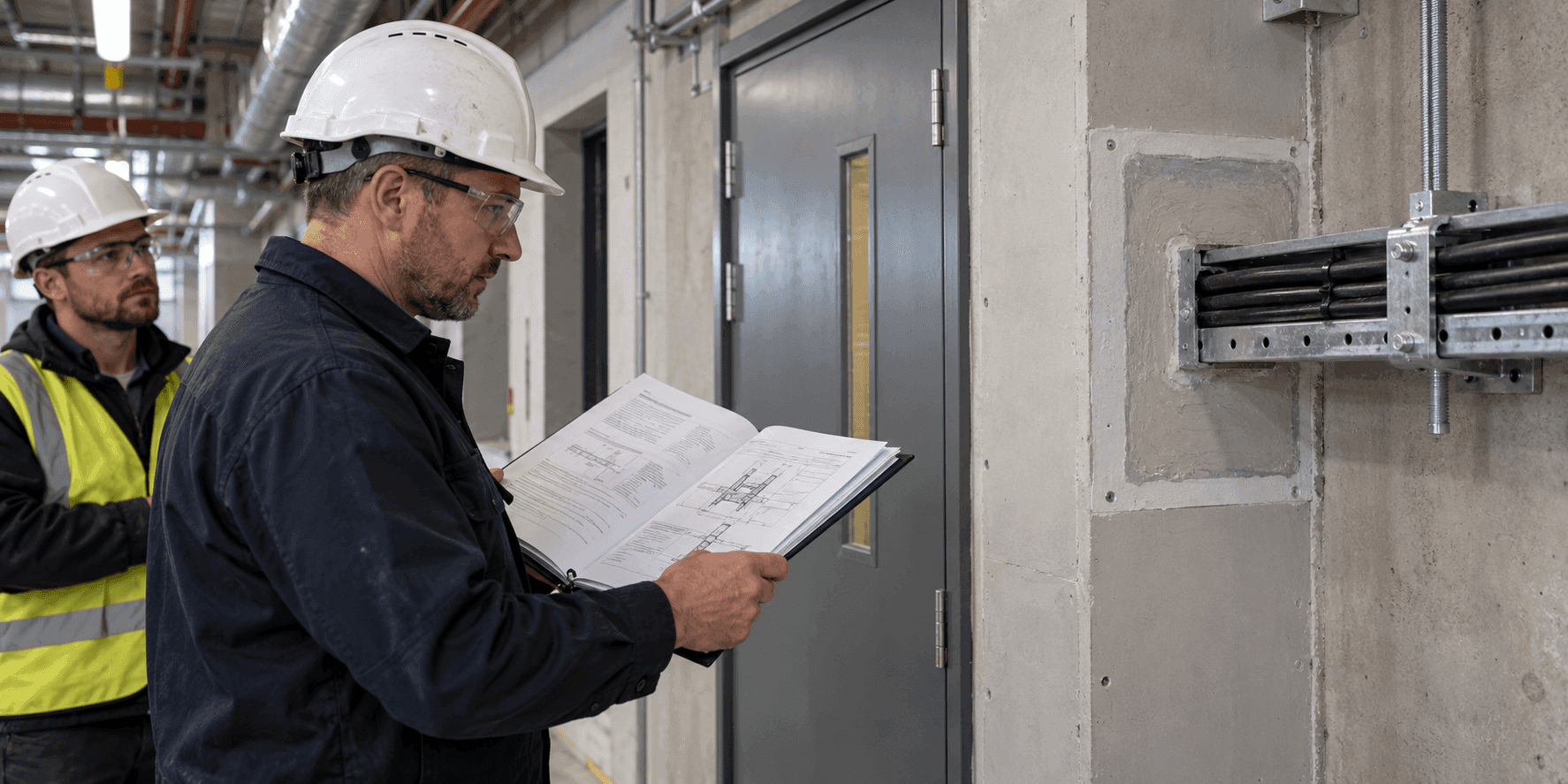
Access doors, conveyors, pipes and cable trays introduce further interfaces. Each opening needs a detail compatible with the barrier’s required performance.
Where fire compartmentation walls form an enclosed boundary, continuity at roofs, floors and adjoining construction also needs to be established.
Treat Supports and Connections as Part of the System
The barrier depends on its supporting structure, anchors, framing and connections. These must accommodate the relevant loads and movements while maintaining the required separation.
Review the actual span, height, support conditions and fixing arrangement against the evidence. A panel tested within one framing arrangement does not automatically cover a taller freestanding installation.
Thermal movement also needs a deliberate detail. An interface that restrains movement excessively or opens beyond its assessed capacity can undermine the intended performance.
Where explosion loading is credible, hydrocarbon blast protection needs a separate assessment. Any required ability to withstand blast followed by fire should be stated explicitly.
Preserve Access and Performance
Operating facilities require inspections, equipment removal and periodic modifications. Barrier design should accommodate these activities without relying on improvised openings or undocumented reinstatement.
Demountable sections need defined connections and replacement procedures. Inspection should cover corrosion, impact damage, loose fixings, damaged seals and altered penetrations.
Changes to nearby equipment also warrant review. A new release source, different operating pressure or relocated asset