
How Passive Fire Protection Supports Business Continuity
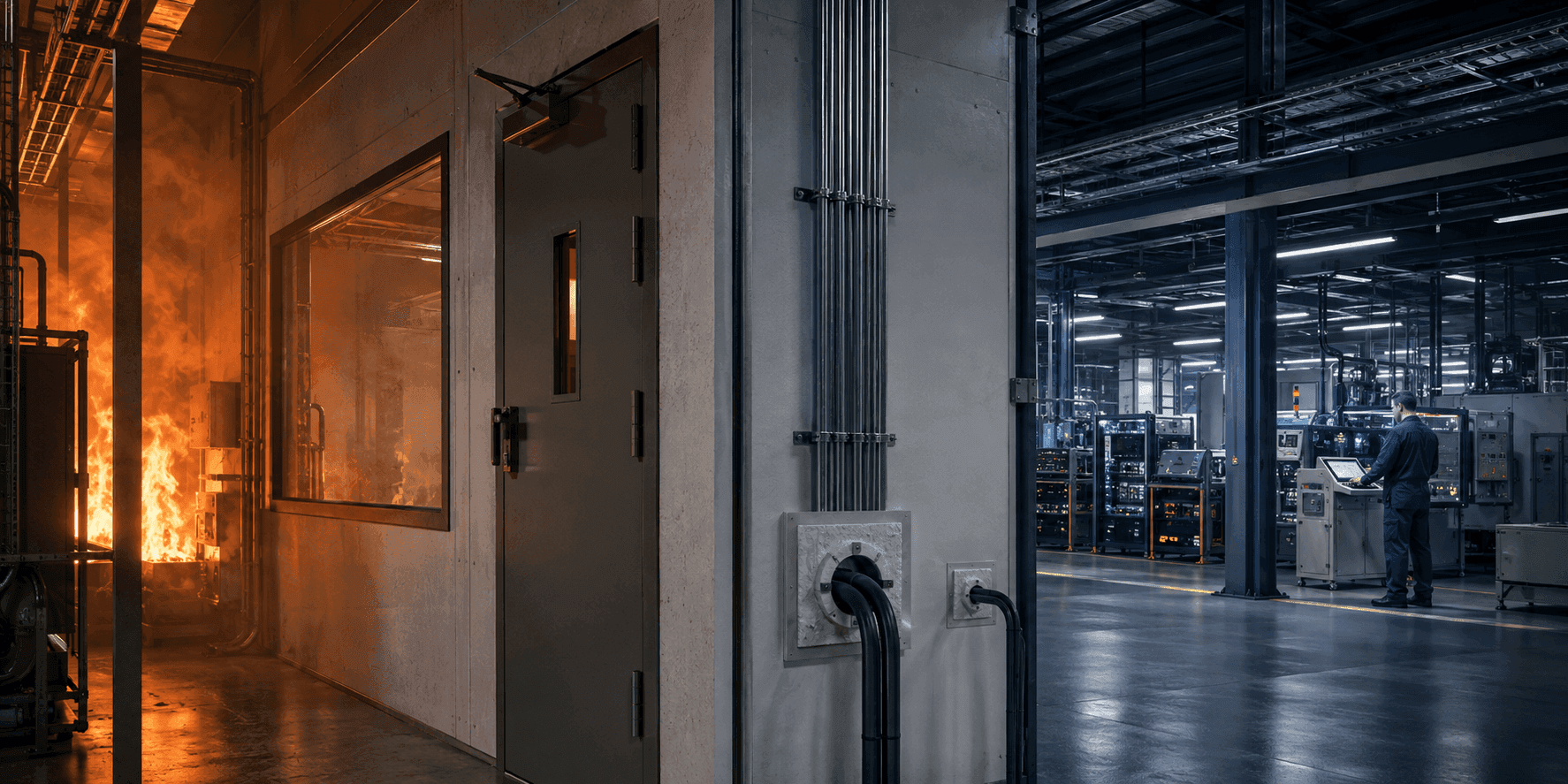
Passive fire protection supports business continuity by helping contain fire, protect selected areas and reduce escalation across an asset. Its value depends on a coordinated fire strategy, maintained boundaries and realistic recovery planning.
How Does Passive Fire Protection Support Continuity?
Business continuity is the ability to maintain priority functions or restore them within an acceptable period after disruption. Passive fire protection contributes by limiting how far fire and hot gases can spread, separating hazards and protecting selected structures, services or equipment.
Containment can reduce the area directly affected by an incident and help emergency teams work within the planned response strategy. It can also prevent one local event from exposing several operational zones. However, fire resistance alone does not guarantee continuity.
Continuity also depends on redundancy, isolation, utilities, access, spares, data, people and recovery procedures. Passive protection should therefore be connected to the asset's critical-function analysis and kept effective through inspection and controlled modifications.
- Containment: Limits escalation between defined compartments or hazard areas.
- Critical-area separation: Protects selected rooms, equipment or services where the strategy requires it.
- Structural protection: Supports the required fire performance of defined structural elements.
- Protected access: Can contribute to planned escape, intervention or maintenance routes.
- Recoverability: Reduces the potential extent of damage when boundaries remain effective.
- Lifecycle assurance: Inspection and change control maintain the intended protection over time.
Protection Measures and Continuity Outcomes
- Compartmentation: Limits spread between defined areas. Continuity benefit: reduces escalation and affected footprint.
- Equipment enclosures: Separates selected critical assets from exposure. Continuity benefit: supports protection of priority functions.
- Structural protection: Helps maintain defined structural performance. Continuity benefit: can reduce wider damage and unsafe access.
- Protected services: Addresses selected ducts, cables or service routes. Continuity benefit: supports essential-system planning where applicable.
- Inspection: Finds damage and unauthorised changes. Continuity benefit: preserves readiness before an incident.
Connecting Fire Protection to Continuity Planning
The fire strategy and continuity plan should use consistent assumptions about compartments, priority assets and recovery routes.
- Identify critical functions: Determine which operations, rooms and services require protection or rapid restoration.
- Map fire dependencies: Review how fire, smoke, utilities and access could affect multiple functions.
- Set containment objectives: Define which boundaries and enclosures limit credible escalation.
- Plan isolation and access: Ensure teams can safely isolate, inspect and restore affected systems.
- Prepare recovery information: Maintain drawings, system details, contacts, spares and decision responsibilities.
Continuity Gaps Passive Protection Cannot Solve Alone
A strong barrier does not address every cause of downtime or every recovery dependency.
- Common utility loss: Separated equipment still depends on one power, cooling or control source.
- No operational alternative: There is no redundant route or temporary method for delivering the service.
- Inaccessible damage: Teams cannot safely reach, isolate or replace affected assets.
- Outdated configuration records: Recovery decisions rely on drawings that do not reflect changes.
- Unmaintained boundaries: Damage and new penetrations reduce containment before the event occurs.
Continuity Benefits of Maintained Containment
Benefits should be considered alongside operational and emergency-response measures.
- Reduced escalation: Local events are less likely to expose unrelated zones.
- Protected priorities: Selected spaces and services can receive targeted protection.
- More manageable recovery: A smaller affected footprint can simplify assessment and restoration.
- Clearer preparedness: Inspection and records connect protective systems to continuity planning.
What Should Asset Owners Review?
Continuity reviews should examine both protective boundaries and the systems that depend on them.
- Which services are time-critical?: Define tolerable disruption and recovery priorities.
- Which compartments protect them?: Map walls, floors, doors, services and enclosure interfaces.
- What shared dependencies remain?: Review utilities, controls, cooling, access and people.
- Are boundaries maintained?: Inspect damage, penetrations, doors, joints and alterations.
- Is recovery information usable?: Keep accurate records, contacts, spares and escalation procedures.
How Invicta ANARA Supports Systems-Level Infrastructure Delivery
SECURA by Invicta ANARA supports relevant passive fire-protection and containment requirements that can form part of broader resilience and continuity planning. Outcomes depend on the fire strategy, asset dependencies, complete system evidence and maintained installation.
SECURA by Invicta ANARA. Explore critical containment and protection systems for relevant fire and infrastructure risks.
Fire protection systems. Review Invicta ANARA fire-protection capabilities and related applications.
Industrial fire compartmentation walls. Explore compartmentation walls planned around complete assemblies and project interfaces.
Frequently Asked Questions
Direct answers to common questions about passive fire protection business continuity.
How does passive fire protection support business continuity?
It can limit spread, protect selected areas and reduce escalation, helping contain the extent of disruption.
Does a fire-rated wall guarantee uninterrupted operations?
No. Continuity also depends on utilities, redundancy, access, people, data and recovery procedures.
Which assets should receive priority protection?
Priorities should follow a critical-function and consequence assessment rather than a generic equipment list.
Why are inspections important for continuity?
Damage or unreviewed penetrations can weaken boundaries before an incident and undermine planning assumptions.
Should continuity plans include fire-system records?
Yes. Accurate layouts, system details, limitations and contacts support faster assessment and controlled recovery.
Share the critical functions, compartment strategy and recovery priorities so relevant containment requirements can be reviewed. Discuss an Infrastructure Requirement.