
Active vs Passive Fire Protection: What Is the Difference?
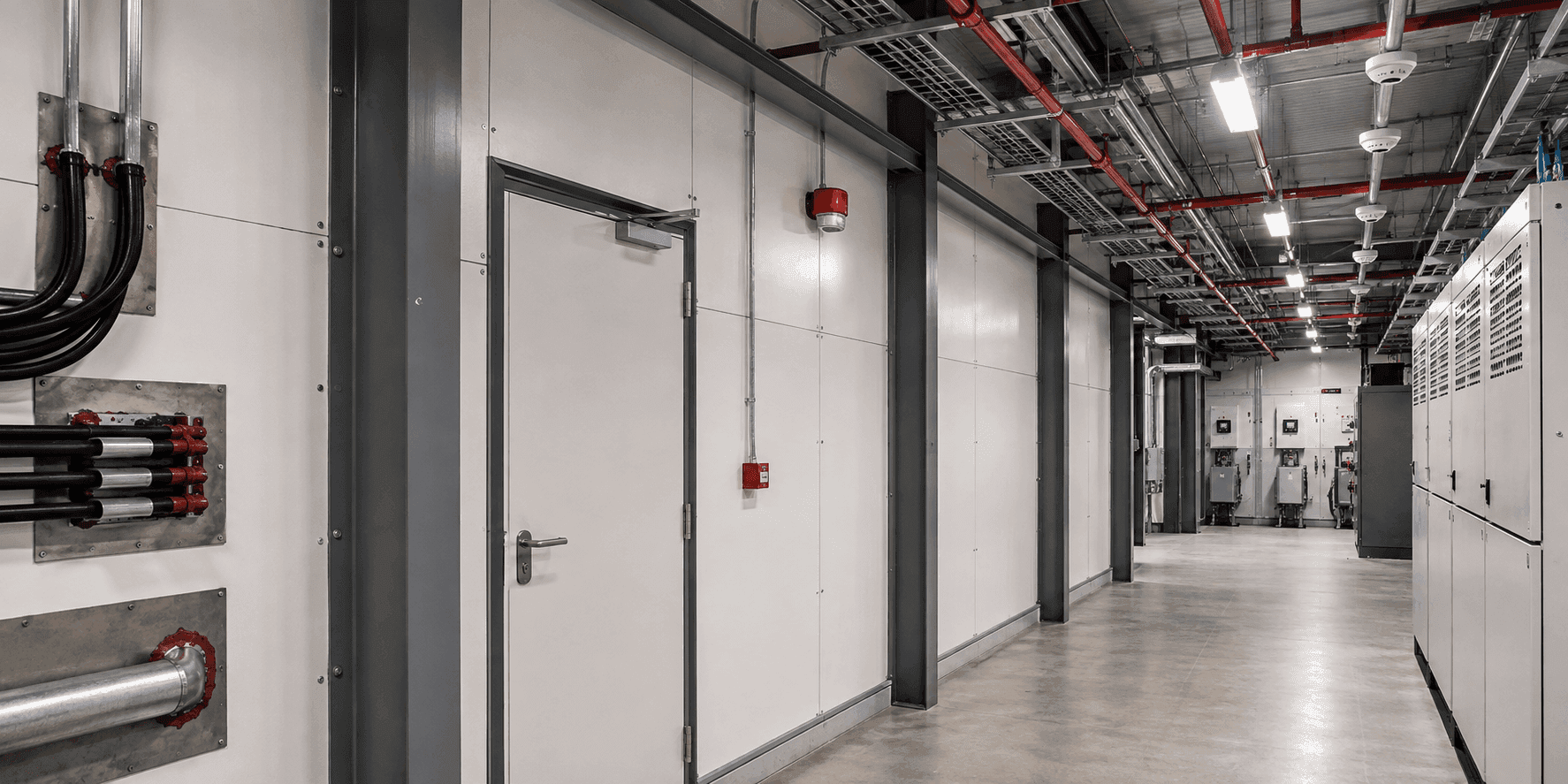
Active fire protection detects, warns, suppresses or controls fire through systems that respond to an event. Passive fire protection uses built-in construction to resist fire, protect elements or limit spread. They are different but complementary.
How Do Active and Passive Fire Protection Differ?
The main difference is how each category performs its role. Active fire protection generally requires detection, activation, controls, utilities or human action. Passive fire protection is built into the asset and provides its intended resistance or separation through the installed assembly.
Active examples can include detection, alarm and suppression systems. Passive examples can include fire-rated walls, doors, floors, ceilings, ducts, structural protection and service-penetration systems. Some products combine passive elements with active operation, so classification should follow the actual system and fire strategy rather than its appearance.
Neither category should be treated as a substitute for the other without fire-engineering justification. Suppression may control a developing fire, while compartmentation can limit spread. Detection can initiate evacuation, while protected construction can support the time and routes required for that response.
- Active protection: Detects, signals, suppresses or controls through devices, controls, utilities or people.
- Passive protection: Uses fire-resisting construction and protective assemblies built into the asset.
- Shared objective: Both support the fire strategy by managing different parts of detection, response, containment and protection.
- Different assurance: Active systems need functional testing; passive systems need configuration and condition inspection.
- Coordinated interfaces: Openings, controls, dampers, doors, curtains and services can connect active and passive functions.
Active Fire Protection Compared with Passive Fire Protection
- Primary role: Detect, warn, suppress or manage fire effects. Resist fire, protect elements or limit spread.
- Activation: Usually requires automatic or manual response. Its core passive function is built into the installed assembly.
- Dependencies: May depend on power, water, controls, devices and maintenance. Depends on correct construction, continuity and physical condition.
- Assurance: Functional tests, servicing and alarm/control verification. Inspection of configuration, interfaces, damage and alterations.
- Examples: Detection, alarms and suppression systems. Fire-rated barriers, doors, ducts, seals and structural protection.
How Active and Passive Measures Work Together
A coordinated fire strategy assigns each measure a defined role and considers how failure or delay in one layer affects the others.
- Detection and warning: Active systems identify conditions and initiate alarms or control actions.
- Containment: Passive boundaries help limit movement of fire and hot gases between defined areas.
- Suppression: Active systems may control or extinguish fire within the design conditions.
- Protected movement: Fire-resisting routes and doors can support evacuation and intervention.
- System interfaces: Dampers, shutters, curtains, doors and penetrations require coordinated operation and physical continuity.
Common Coordination Failures
Problems arise when each package is designed independently or when project changes are not assessed across both systems.
- Services breach compartments: Active-system pipework and cabling create openings without coordinated protection.
- Controls and barriers conflict: Doors, dampers or curtains do not operate as assumed in the fire strategy.
- Maintenance is separated: Functional servicing overlooks passive damage, or passive inspection ignores control interfaces.
- Changes affect coverage: Reconfigured rooms, equipment or ceilings alter active and passive assumptions.
- Responsibility is unclear: Different contractors assume another party owns the interface.
Why a Layered Fire Strategy Is Important
Multiple coordinated measures can address detection, response, containment and asset protection without relying on one defence.
- Earlier awareness: Detection and alarms support timely response.
- Controlled spread: Compartmentation helps confine fire to planned boundaries.
- Support for intervention: Suppression and protected access can assist emergency actions.
- Reduced common gaps: Coordinated design identifies penetrations, controls and responsibility interfaces.
What Should Project Teams Confirm?
The fire strategy should explain the purpose and dependency of each measure.
- Which function belongs to each system?: Separate detection, suppression, containment and structural-protection requirements.
- What happens if one layer is unavailable?: Review dependencies, impairment arrangements and escalation.
- How are penetrations protected?: Coordinate every service crossing through fire-resisting construction.
- Who tests and inspects interfaces?: Assign responsibilities for functional and physical checks.
- How are changes reassessed?: Review alterations against both active coverage and passive boundaries.
How Invicta ANARA Supports Systems-Level Infrastructure Delivery
SECURA by Invicta ANARA supports relevant passive fire-protection and containment requirements within the wider project fire strategy. The precise role of each system, its interfaces and its evidence must be confirmed for the proposed configuration.
SECURA by Invicta ANARA. Explore critical containment and protection systems for relevant project risks.
Fire protection systems. Review Invicta ANARA fire protection capabilities and related system applications.
Industrial fire compartmentation walls. Explore compartmentation walls planned around the complete boundary and project-specific requirements.
Frequently Asked Questions
Direct answers to common questions about active vs passive fire protection.
What is the difference between active and passive fire protection?
Active systems respond through detection, controls or activation. Passive systems use built-in assemblies to resist fire or limit spread.
Are sprinklers passive fire protection?
No. Sprinklers are generally active suppression systems because they operate in response to fire conditions.
Is a fire door active or passive?
The fire-resisting door assembly is passive protection, although closers, hold-open devices or powered operation can add active elements.
Do buildings need both types?
Many fire strategies use both, but exact requirements depend on the asset, hazards, design and applicable rules.
How should they be inspected?
Active systems require functional servicing and testing, while passive systems require checks of configuration, condition and alterations.
Share the fire strategy and active-passive interfaces so relevant containment and protection requirements can be reviewed. Discuss an Infrastructure Requirement.