
What Is Hostile Vehicle Mitigation?
What Is Hostile Vehicle Mitigation?
Hostile vehicle mitigation, or HVM, is the coordinated use of physical measures, site planning and operating procedures to reduce risks from vehicles used deliberately against people, buildings or critical assets.
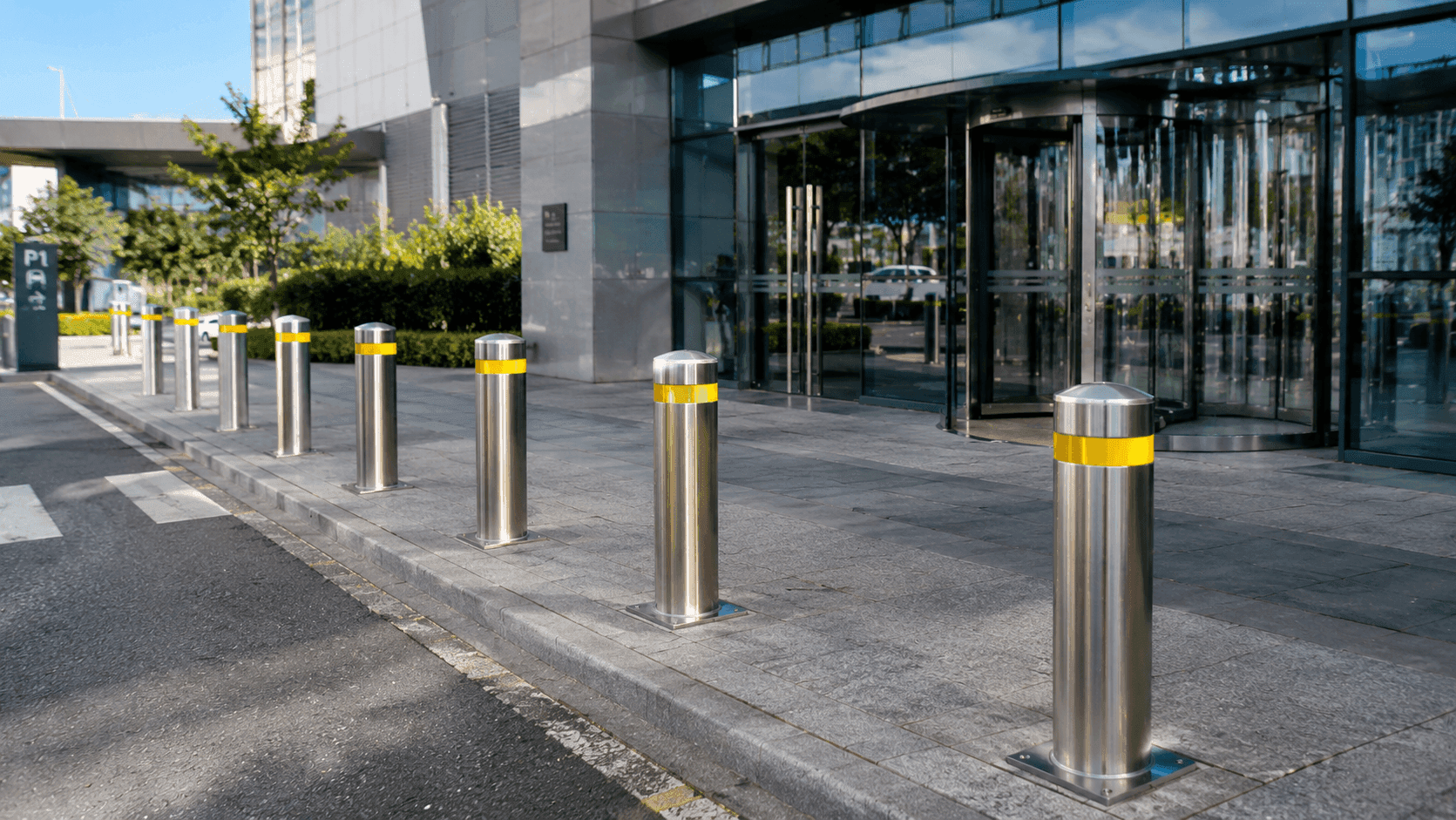
It can involve controlling vehicle access, establishing separation, modifying approach routes and installing appropriately assessed vehicle security barriers.
The starting point is the threat and the site. A row of substantial-looking bollards does not establish protection unless its performance, arrangement and installation are suitable for the identified vehicle scenario.
Define the Vehicle Threat and Protected Area
Establish what needs protection and how a hostile vehicle could reach it. Relevant scenarios can include deliberate impact, unauthorised access or positioning a vehicle near a sensitive asset.
These scenarios require different considerations. Preventing a vehicle from entering a pedestrian area differs from maintaining distance between vehicle access and an occupied building.
ISO 22343-2 identifies the asset, threat and attack method as foundations of a risk-based mitigation strategy. iso.org This helps engineers define the purpose of the scheme before selecting equipment.
Record the protected boundary, operating hours, authorised access requirements and consequences of a breach. Connect these requirements to the wider security systems strategy.
Assess the Approach Conditions
Vehicle type, mass, achievable speed and impact angle influence the demand on a barrier.
Posted speed limits describe permitted driving behaviour. They do not establish the speed achievable during a deliberate attack.
A vehicle dynamics assessment examines credible approaches and helps quantify relevant impact conditions. NPSA identifies this assessment as an important step in developing an HVM scheme. NPSA
Review route geometry, available acceleration distance, gradients and accessible surfaces beyond the normal carriageway. Assess proposed layout changes rather than assuming that a bend, kerb or landscaping feature provides sufficient speed reduction.
The resulting design basis should explain which approaches and vehicle scenarios the scheme addresses.
Understand What Barrier Evidence Demonstrates
A vehicle security barrier rating describes performance under defined test conditions. It needs to be read alongside the tested vehicle, impact speed, angle, penetration result and installation arrangement.
A barrier that looks similar to a tested product may have different dimensions, materials, foundations or connections.
ISO 22343-1 provides a vehicle-impact testing and rating framework. Where evidence references another standard, assess its scope and relevance rather than treating every rating format as interchangeable.
Also distinguish traffic-management equipment from vehicle security barriers. A gate or bollard intended to control routine access does not automatically provide demonstrated resistance to a hostile impact.
Design the Whole Barrier Line
The scheme must address the complete protected boundary, including access points and junctions with adjacent construction.
Review barrier spacing, end conditions, potential bypass routes and the relationship with neighbouring walls or structures. Avoid assuming that ordinary street furniture provides equivalent resistance.
Foundations need particular attention. Ground conditions, reinforcement, underground utilities, drainage and available installation depth can constrain the proposed system.
Changes from the tested foundation arrangement require appropriate justification. A shallower excavation or revised reinforcement detail is a change to the system, even when the visible barrier remains identical.
Coordinate these requirements early with civil, structural and building-services teams.
Accommodate Authorised Access and Pedestrian Movement
Fixed barriers can suit locations where vehicle passage is unnecessary. Movable barriers may be needed for deliveries, maintenance or emergency access.
For movable systems, define operating frequency, control arrangements, power requirements, fault behaviour and the procedures for admitting vehicles. The protective boundary changes while the opening is available.
Pedestrian flow also matters. Barrier positions should be assessed against accessibility, queues, evacuation routes and interactions between pedestrians and vehicles.
These operational relationships form part of physical security protection. Selecting an impact-rated product is one decision within that broader design.
Verify Installation and Maintain the Scheme
Inspection should confirm that the delivered arrangement matches the approved design and applicable evidence.
Before handover, establish:
- Defined assets, threats and credible vehicle approaches.
- Required impact conditions and performance criteria.
- Relevant barrier test evidence.
- Suitable foundations, connections and ground conditions.
- Coordinated access, pedestrian and emergency arrangements.
- Inspection, maintenance and fault-response responsibilities.
Record concealed foundation work while accessible. Demonstrate the operation of movable barriers, including agreed fault and recovery conditions.
Review the scheme after changes to roads, entrances, landscaping or site use. A new approach route or permanently opened access point can alter the assumptions behind the original assessment.
Effective HVM brings the vehicle threat, site geometry, evidenced barrier system and daily operations into one coordinated design.