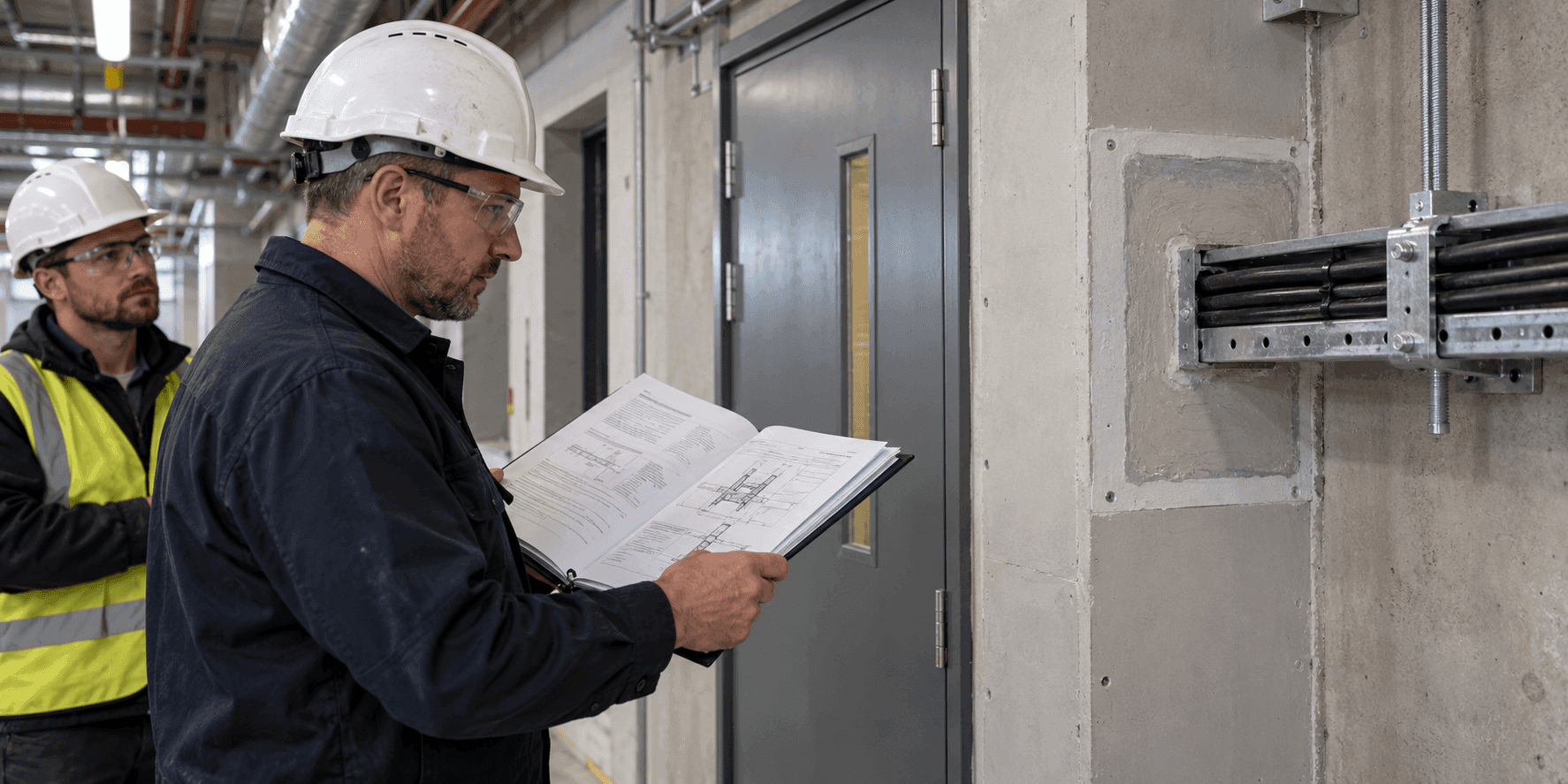
Security Door vs Ballistic Door — What Is the Difference?
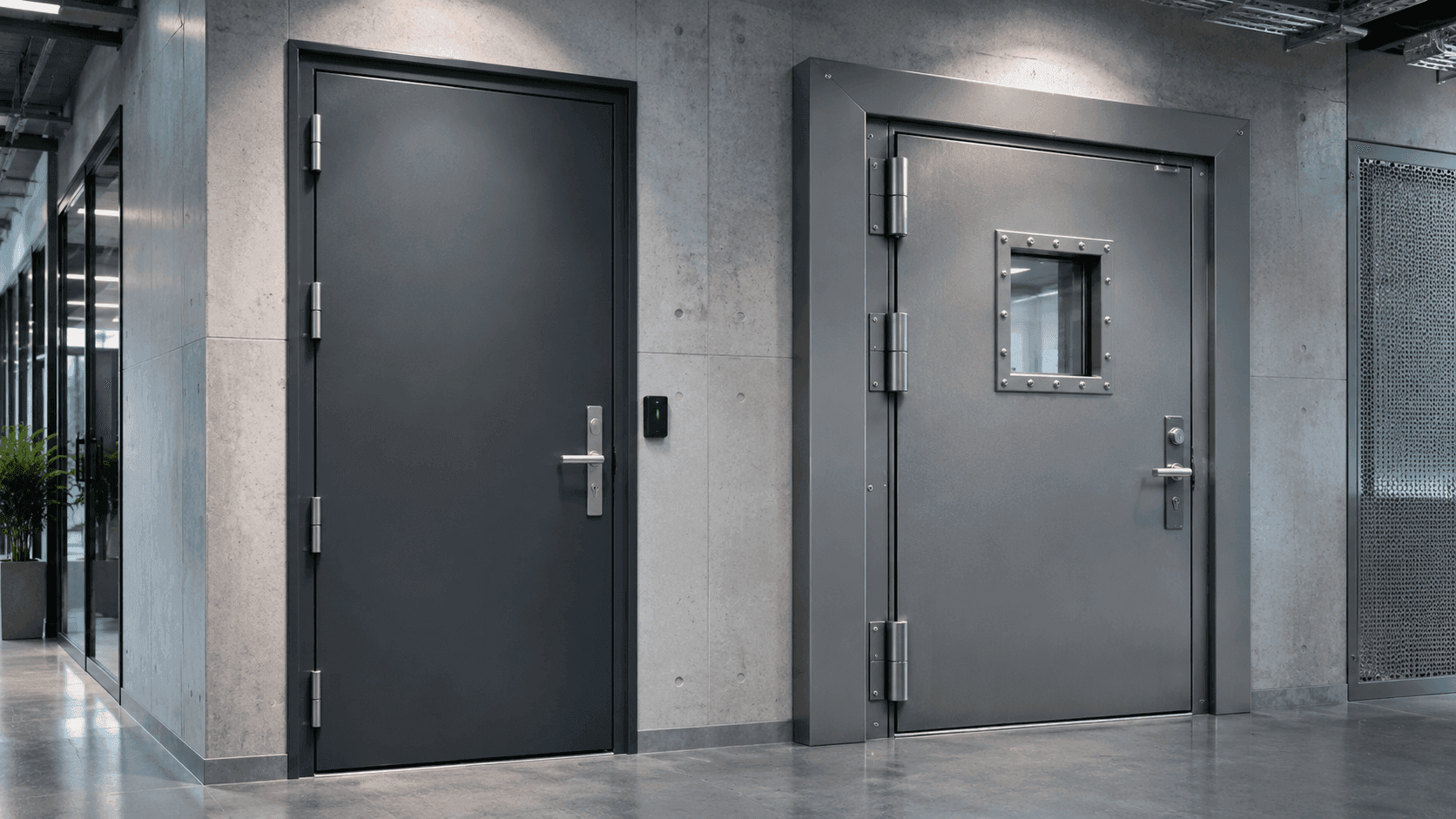
Security Door vs Ballistic Door — What Is the Difference?
A security door specified for forced-entry resistance delays physical intrusion under defined attack conditions. A ballistic door resists specified projectile threats under defined firing conditions. One doorset may provide both capabilities, but each requirement needs applicable evidence.
The distinction matters when protecting occupied rooms, critical equipment or restricted areas. A door that delays entry may still allow projectile penetration. Equally, ballistic resistance alone does not establish how long a doorset will resist a manual attack.
The specification must identify whether the objective is to delay entry, resist gunfire or achieve both.
Start With the Threat, Not the Product Label
“Security door” is a broad description. It can refer to enhanced locking, access control or demonstrated attack resistance, so the term needs qualification before procurement.
ProtectUK distinguishes manual forced-entry attacks from ballistic threats when defining door-protection requirements. ProtectUK This provides a useful starting point for the design brief.
For forced-entry resistance, establish the relevant attack tools, methods, resistance classification and operating condition.
For ballistic protection, establish the projectile threat and required acceptance criteria. The consequences also matter: protecting occupants from gunfire and preventing an attacker from gaining entry are related objectives, but they are not identical.
Forced-Entry Evidence Measures Resistance to Intrusion
Forced-entry testing assesses an assembly against the attack conditions defined by the selected framework. These may include specified tools, attack procedures, timing rules and breach criteria.
The resulting classification applies within that framework. A stated resistance time is incomplete without knowing how time is measured and what constitutes failure.
Engineers should check whether the evidence covers the proposed leaf, frame, locks, hinges, glazing and dimensions. The supporting construction and fixing requirements also need to be understood.
Neither door weight nor the number of locking points establishes a resistance classification. Individual hardware ratings cannot replace evidence applicable to the assembled doorset.
Ballistic Evidence Addresses a Defined Projectile Threat
A ballistic rating needs to be read alongside its test basis. Relevant variables include ammunition construction, projectile velocity, shot pattern, impact locations and acceptance criteria.
A calibre description alone is insufficient because different ammunition types can present different demands.
When specifying handgun and rifle protection, confirm exactly which threats the evidence addresses. Also check how the assessment treats fragments or material released from the protected face.
Evidence for a ballistic panel does not automatically establish the performance of a complete door incorporating that panel. Frame junctions, glazing, hardware preparation and other discontinuities require appropriate consideration.
Combined Protection Needs Compatible Evidence
A facility may require both resistance to entry and protection against gunfire. The proposed doorset must then satisfy both requirements in its intended configuration.
Separate reports for unrelated assemblies do not demonstrate that a new combination performs equivalently. A different lock, added vision panel or altered frame can affect the relationship between the two sets of evidence.
Consider a protected control room requiring a glazed observation panel. The design team needs to establish that the glazing and its retention arrangement remain covered for the specified threats, alongside the doorset’s intrusion resistance.
Where the threat includes gunfire followed by forced entry, clarify whether the evidence addresses that sequence. Separate tests should not be assumed to demonstrate sequential performance.
Check the Opening Around the Door
Both types of doorset depend on suitable installation and surrounding construction.
Review the frame, anchorage, substrate, tolerances and perimeter detail. For a ballistic boundary, assess adjacent walls, sidelights and junctions as well as the door itself.
A ballistic protection system needs continuity appropriate to the protected area. An isolated rated door cannot establish the performance of the enclosure around it.
Installation drawings should identify responsibility for interfaces. This is particularly important where the doorset supplier, wall contractor and access-control installer have separate scopes.
Include Operation and Maintenance in the Specification
A protected opening must still support authorised access, accessibility and applicable emergency escape requirements.
Confirm the locking arrangement used during normal operation and whether it corresponds to the assessed configuration. Coordinate electric locks, release devices, monitoring and power-loss behaviour before ordering the doorset.
Before acceptance, verify:
- Defined forced-entry and ballistic requirements.
- Applicable evidence for the proposed assembly.
- Covered dimensions, glazing and hardware.
- Suitable wall construction and anchorage.
- Coordinated access and escape functions.
- Documented inspection and replacement requirements.
Later hardware substitutions or alterations need the same attention. A convenient replacement can change the configuration on which the original evidence depends.
The right door is the one whose demonstrated performance matches the identified threats, installed opening and operational requirements.