Pool Fire vs Jet Fire: Why the Scenario Matters
Pool Fire vs Jet Fire: Why the Scenario Matters
A liquid release beneath a pipe rack and a pressurised leak directed towards a valve can expose equipment to very different fire conditions. Both involve hydrocarbons, but specifying the same protection merely because it carries a “hydrocarbon fire rating” can leave an important gap in the design.
The distinction between pool fire and jet fire affects where protection is needed, what it must withstand and which evidence supports its selection. The starting point is the credible release scenario.
What Creates a Pool Fire?
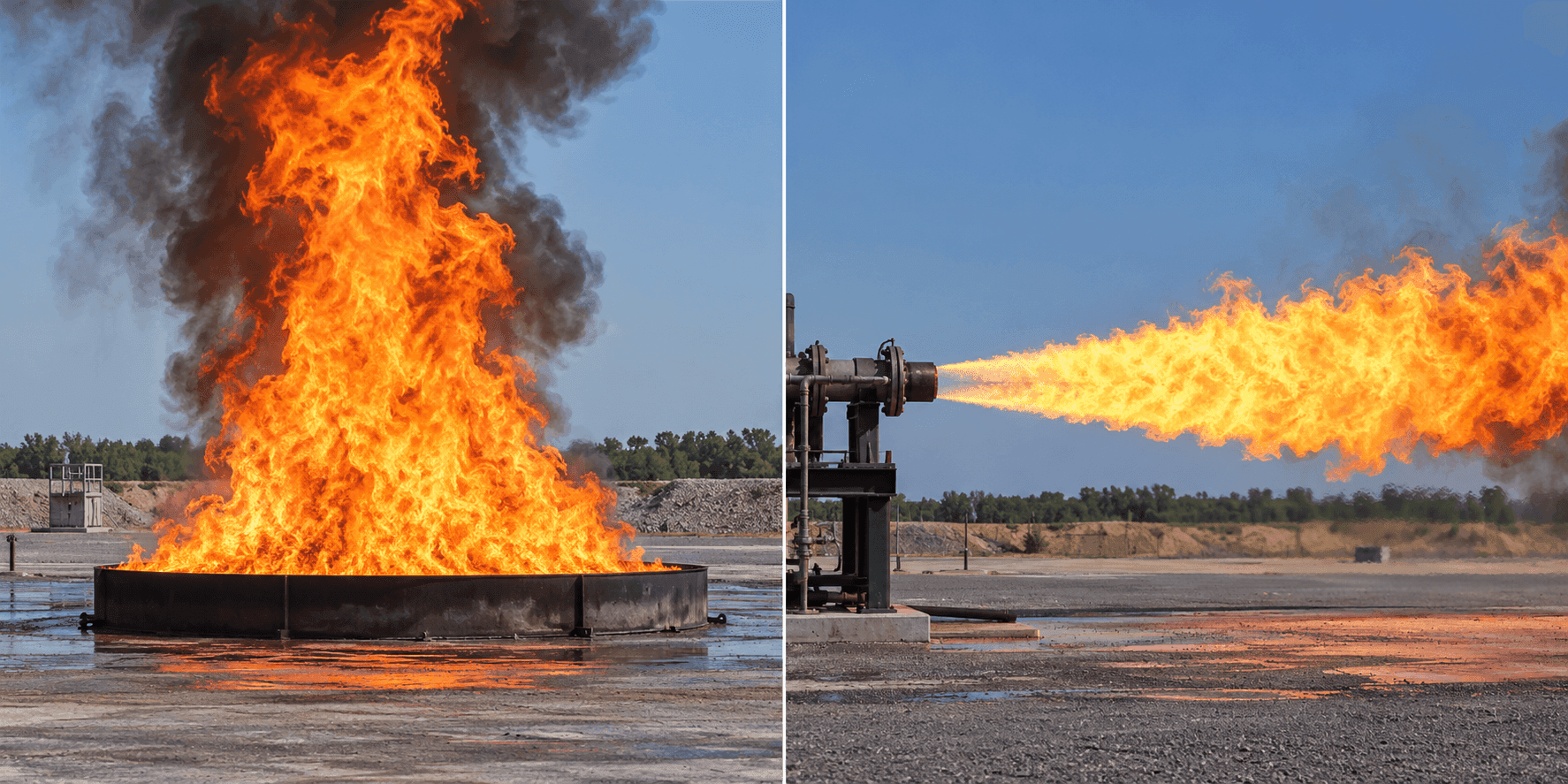
A pool fire develops when released liquid accumulates and burns above a surface. The potential exposure depends on the fuel, release rate, available inventory, drainage, containment and surrounding geometry.
For example, a release may collect within a bund or spread beneath equipment. The resulting fire can engulf supports and expose neighbouring assets to radiation. HSE describes pool fires as burning above a pool of vaporising fuel with low initial momentum.
For the engineer, the practical question is where the liquid can travel and which assets fall within the resulting exposure. Drainage and equipment layout therefore influence the protection boundary.
What Makes a Jet Fire Different?
A jet fire results when a pressurised release ignites, creating a directional flame. Release pressure, opening size, fuel composition and orientation influence the exposure.
Where the flame impinges on protection, the system may face concentrated heating alongside mechanical and erosive effects. Joints, exposed edges, fixings and removable covers consequently deserve particular attention.
ISO 22899-1 provides a method for evaluating passive fire protection under specified jet-fire conditions. Its results describe performance within those conditions; they do not establish universal suitability for every pressurised release.
A potential leak direction can therefore matter as much as the distance between equipment and the protection system.
Temperature Alone Does Not Define the Demand
Comparing headline flame temperatures gives an incomplete picture. Heat transfer also depends on radiation, convection, flame contact, exposure duration and the geometry of the protected asset.
A furnace test representing rapid hydrocarbon heating does not automatically demonstrate resistance to jet impingement. Equally, a jet-fire result needs to be checked against its tested arrangement and acceptance criteria.
The specification should identify the exposure and the required outcome. A structural support may need to remain below a defined limiting temperature, while a barrier may need to maintain separation. Equipment protection may require additional evidence that a critical function remains available.
Connect the Scenario to the Consequence
Consider a pipe rack carrying lines needed for emergency isolation. Protection of its supports may help prevent collapse, but that alone does not demonstrate that the valves, actuators or cables will continue operating.
Ask what failure would mean:
Could it cause further loss of containment?
Could it prevent isolation or shutdown?
Could it expose adjacent equipment?
Could it obstruct an essential access route?
These questions establish the purpose of hydrocarbon fire protection. They also help define the required duration using the project’s isolation, depressurisation and emergency-response assumptions.
The duration should follow the design basis, rather than being selected simply because a particular rating is available.
Check the Complete Installation
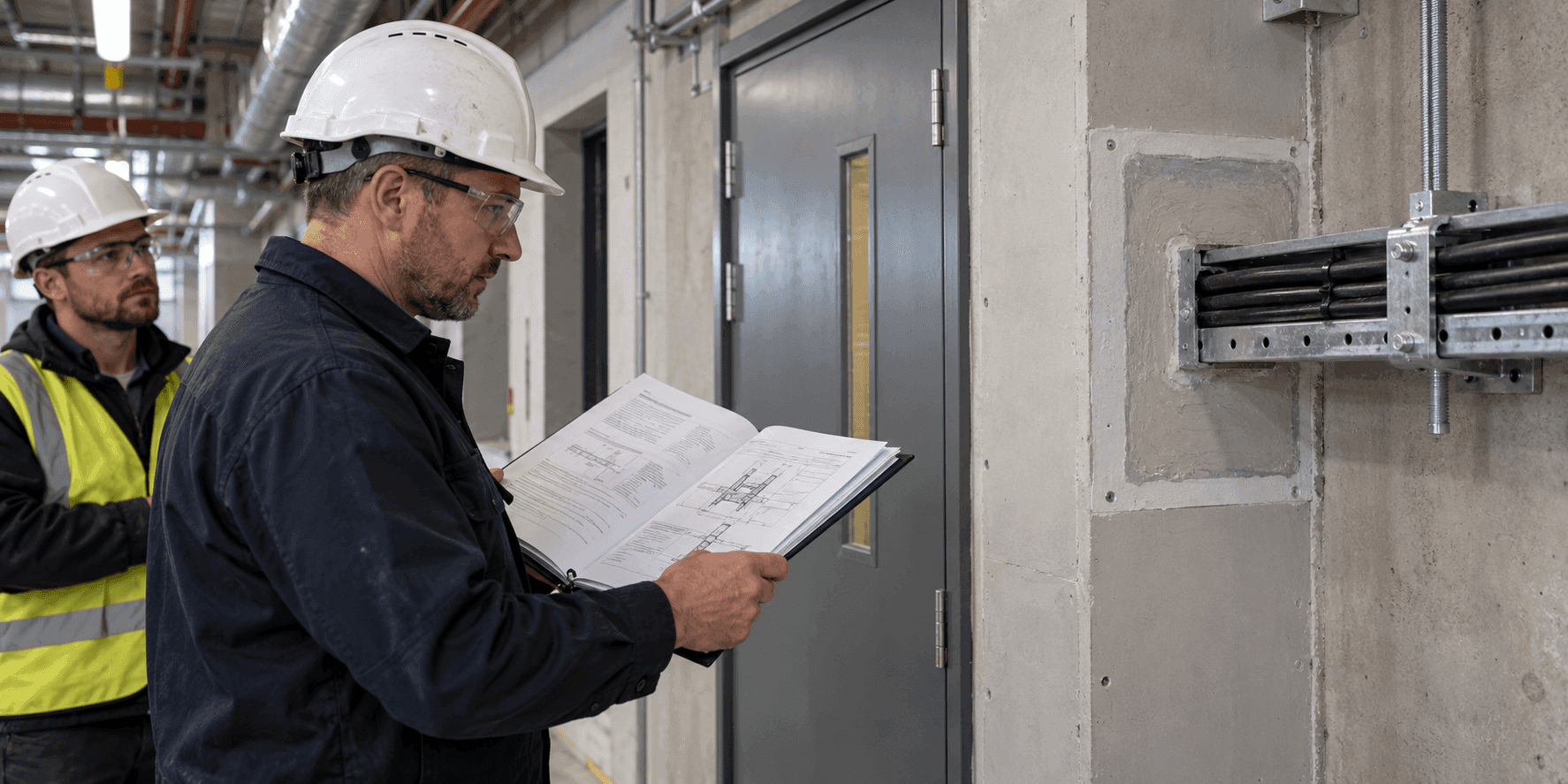
Fire-test evidence applies to a defined specimen. The proposed installation needs a corresponding review of substrate, dimensions, protection thickness, support arrangement, joints, fixings and penetrations.
A barrier containing access panels and service openings introduces details that a plain test panel may not represent. Similarly, protection around irregular equipment can create discontinuities at brackets, pipe connections and inspection points.
Where fire barrier systems separate process areas, the assessment should include their connections to the surrounding structure. Where explosion loading is also credible, hydrocarbon blast protection requires its own assessment, including any relevant sequence of blast damage followed by fire.
Fire resistance alone does not establish blast resistance.
Specify for the Operating Facility
Protection must remain serviceable before a fire occurs. Weather, corrosion, vibration, mechanical damage and maintenance activity can affect the installed condition.
Removable protection needs defined reinstatement details. Penetrations introduced during modifications need review, and inspection must reach joints and concealed interfaces where deterioration could develop.
A useful specification therefore records the credible pool-fire or jet-fire scenario, protected asset, consequence of failure, performance criteria and applicable evidence. It should also define installation details, inspection access and repair requirements.
The decisive question is whether the complete protection arrangement addresses the exposure the asset could actually face. A rating becomes useful only when that relationship is clear.