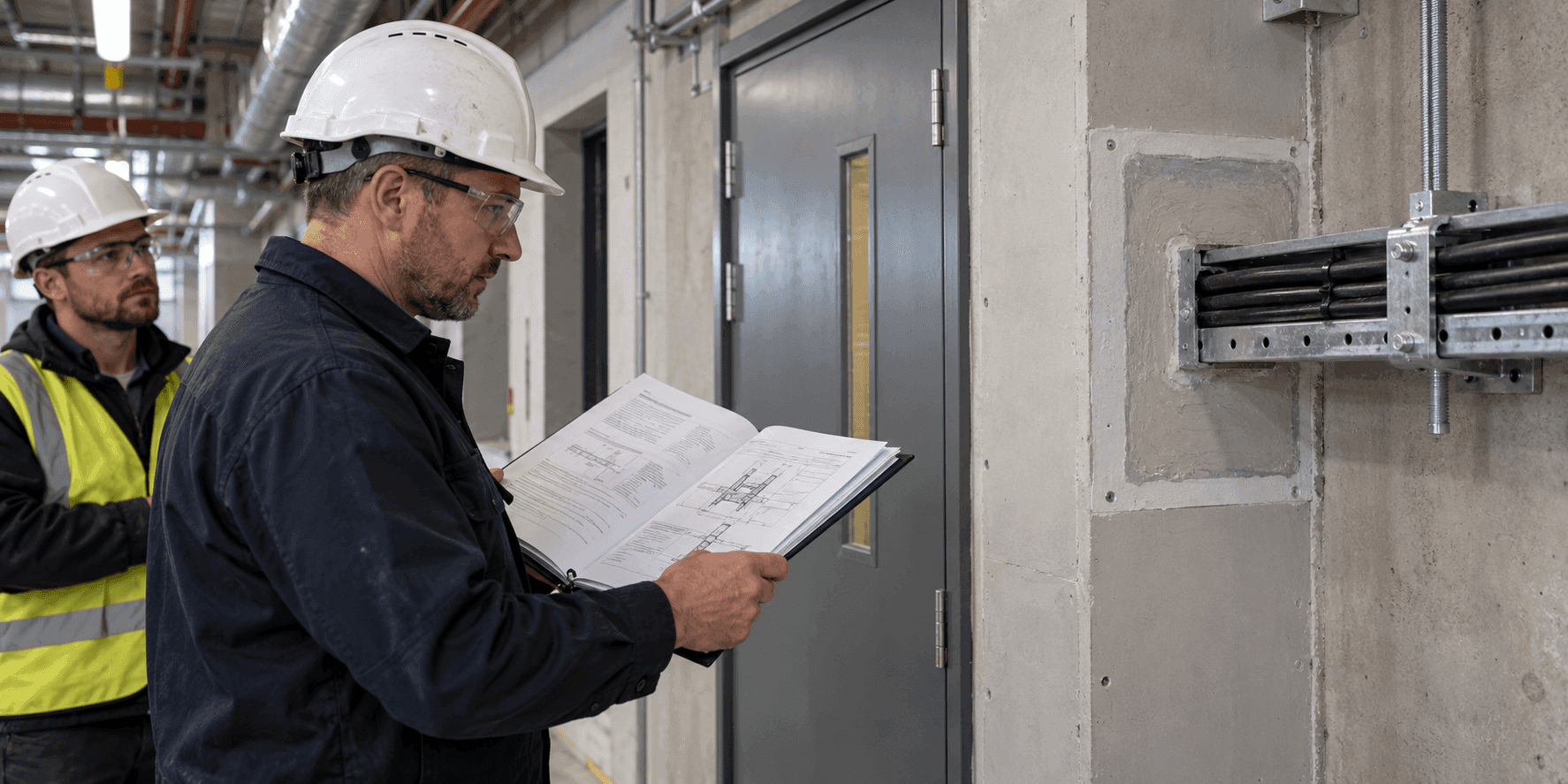
Common Specification Errors in High-Security Openings
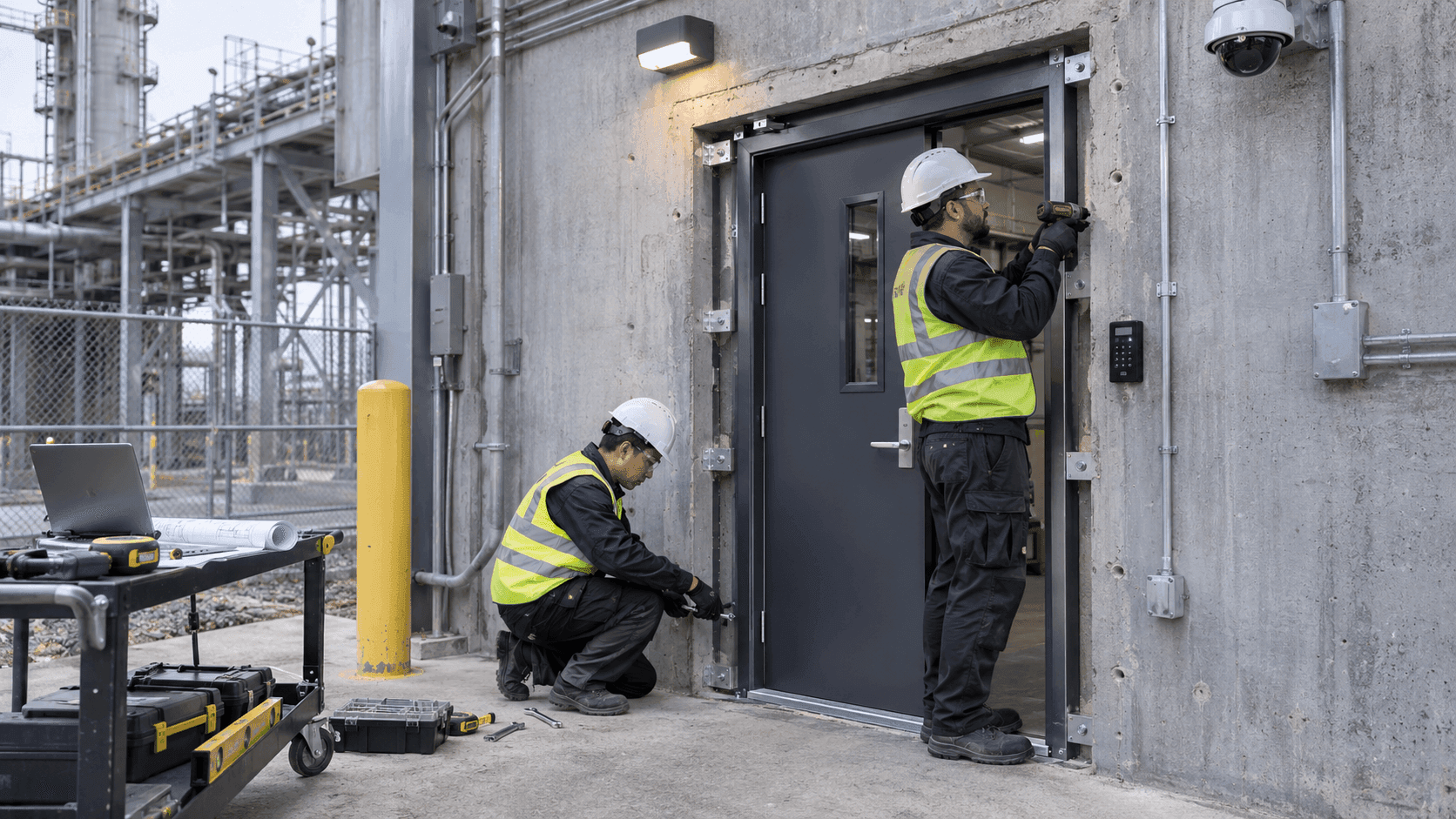
Common Specification Errors in High-Security Openings
A high-security opening can be specified incorrectly before a product reaches site. The door schedule may request a resistance rating while leaving the threat, supporting wall, locking condition or emergency operation undefined.
These omissions become decisions for procurement teams and installers, often after the surrounding construction is complete. Resolving them can require different hardware, structural alterations or further assessment.
A useful specification connects the required protection to an evidenced assembly, a suitable installation and a defined operating arrangement. The following errors interrupt that connection.
1. Specifying “High Security” Without Defining the Threat
“High-security door” describes an intention rather than a measurable requirement.
Establish the protected asset, credible attack and consequence of entry. Where forced-entry resistance is required, identify the applicable standard, edition and classification.
Include the attack direction and operating condition. A doorset assessed with specified locking points engaged may not represent an installation routinely secured by a different device.
Avoid comparing resistance times across testing frameworks without checking tool categories, timing rules and breach criteria.
2. Accepting Component Evidence for the Complete Opening
A rated lock, reinforced leaf or tested glazing panel does not independently establish the performance of the complete doorset.
NPSA’s door-security guidance treats the leaf, hardware, frame, fixings and supporting structure as parts of one system. NPSA The submitted evidence should be reviewed on that basis.
Check the proposed dimensions, leaf arrangement, glazing, frame and hardware against the documented scope. Confirm which variations are permitted and how they are supported.
A certificate should identify what it covers. Its existence does not authorise unrestricted changes to the assembly.
3. Leaving the Wall Interface to the Installer
A drawing marked “security door fixed to wall” leaves the connection unresolved.
The specification should identify the supporting construction and requirements for frame anchorage, fixing centres, embedment, edge distances, packing and perimeter tolerances.
For existing buildings, verify the actual substrate and condition. For framed partitions, establish how forces transfer through the opening reinforcement into the building.
If secondary steelwork is required, include its connections and design responsibility. A substantial surround still needs a suitable attachment to the structure.
4. Treating Different Protective Ratings as Interchangeable
Forced-entry, ballistic, blast and fire performance address different exposures and acceptance criteria.
Where handgun and rifle protection is required, specify the relevant projectile threat and evidence. An intrusion-resistance classification does not demonstrate that capability.
Similarly, fire and blast doors require evidence applicable to the proposed configuration and each specified function.
Separate reports for different product arrangements do not automatically support a combined assembly. If performance after one event matters, define that requirement explicitly rather than assuming separate tests establish sequential resistance.
5. Selecting Access Hardware After Doorset Approval
Access-control requirements often arrive late: an electric lock replaces the scheduled mechanism, or a cable transfer requires additional preparation.
These changes can affect the doorset configuration, local reinforcement and relationship with its evidence.
Coordinate readers, locks, closers, release devices and monitoring before procurement. Define normal entry, normal exit, emergency release and fault behaviour.
Emergency escape also needs resolution alongside security. A locking arrangement should not reach site with contradictory instructions from the security designer and fire strategy.
6. Allowing Uncontrolled Site Substitutions
A replacement anchor or similar-looking lock may solve an immediate installation problem without satisfying the original requirement.
Consider a frame delivered for an opening wider than expected. Additional packing and relocated fixings change the installation detail; they need review before acceptance.
Require proposed substitutions to identify their effect on evidence, interfaces and operation. Record the accepted revision in drawings and schedules so that procurement, installation and inspection use the same information.
7. Omitting Verification and Maintenance Requirements
A specification needs to explain how the completed opening will be accepted and maintained.
Define inspection points for concealed anchors and interfaces. Include operating checks for locking engagement, release functions, monitoring and relevant fault responses.
Handover records should identify:
- The installed assembly and applicable evidence.
- Approved hardware and installation details.
- Accepted variations and inspection records.
- Operating and maintenance instructions.
- Controls for replacement parts and later alterations.
Assign responsibility for reviewing changes after handover. Otherwise, routine maintenance can gradually introduce a configuration different from the one originally accepted.
The strongest specifications make these decisions traceable. The design requirement, submitted evidence, installation detail and operating checks should all describe the same opening.