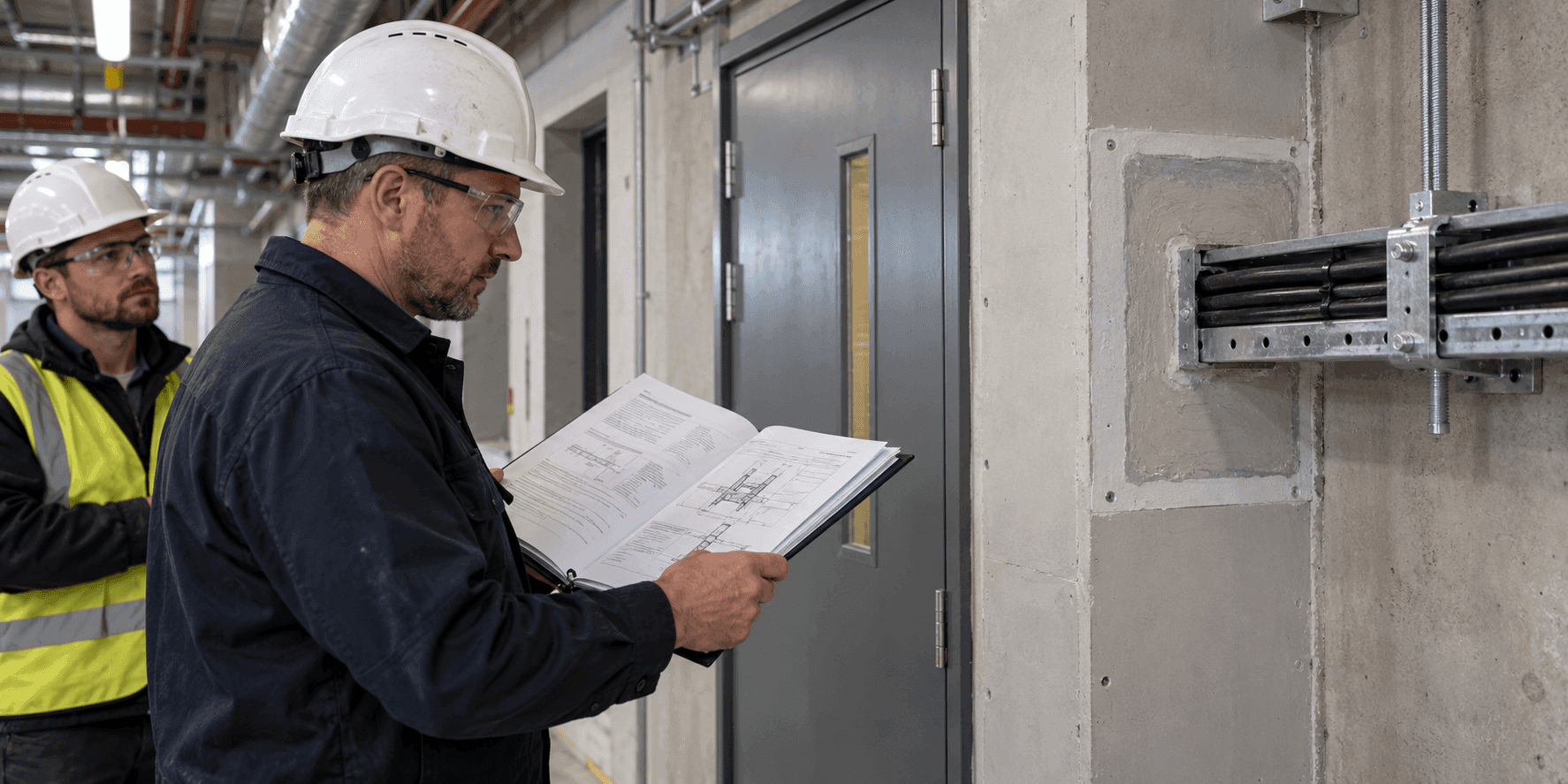
Active vs Passive Vehicle Barriers
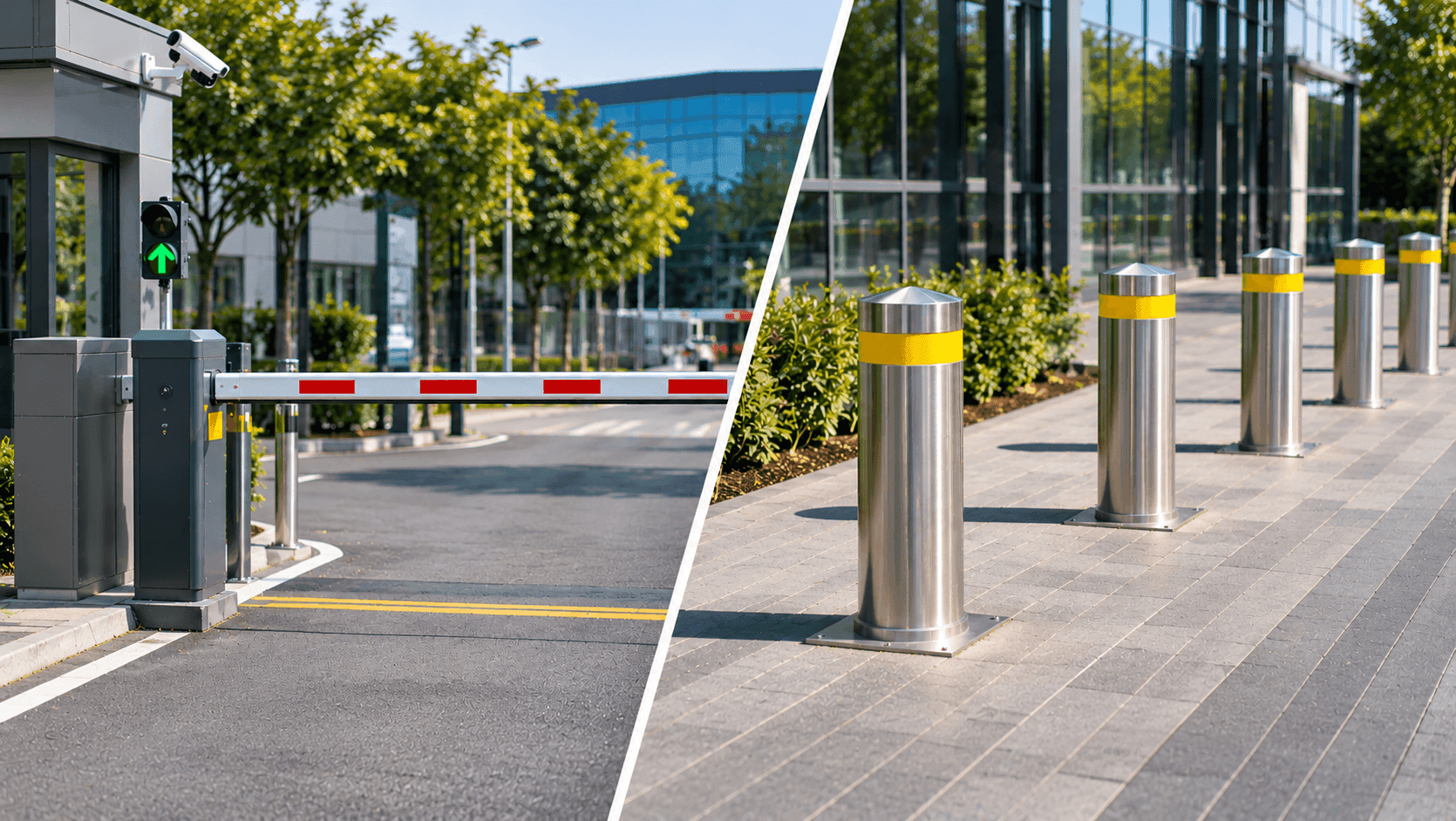
Active vs Passive Vehicle Barriers
Active vehicle barriers can open to allow vehicle passage. Passive vehicle barriers remain static. This distinction describes how the barrier operates; it does not establish its impact resistance or suitability for a particular threat.
NPSA uses these operating categories separately from impact-test criteria and foundation characteristics. npsa.gov.uk Both types therefore require evidence appropriate to their intended application.
For engineers, the selection starts with two questions: where is vehicle access necessary, and what protection must the boundary provide while the facility operates?
Define Where Vehicles Need to Pass
Map authorised vehicle movements before choosing barrier types. Include routine deliveries, maintenance vehicles, waste collection, emergency access and occasional equipment replacement.
A boundary with no vehicle-access requirement may suit a static solution. An entrance handling frequent authorised movements needs an opening arrangement that can support those movements without undermining the security objective.
Assess each location individually. A main delivery entrance and an infrequently used maintenance route may need different operating arrangements.
These decisions should form part of the wider security systems design, alongside screening, detection, communications and response procedures.
Passive Barriers Provide a Static Boundary
Passive systems can include fixed bollards and other static vehicle security barriers. Their protective configuration does not require routine opening or powered movement.
This reduces the number of operating steps needed to maintain the boundary. However, passive does not mean maintenance-free or automatically suitable.
Foundations, connections, spacing and adjacent construction still need design and inspection. Damage, corrosion, ground movement or later alterations can affect the installed arrangement.
Also consider future access. A continuous fixed barrier line may conflict with equipment replacement or emergency arrangements if those needs were omitted from the brief.
Resolve occasional access through a planned, assessed solution rather than an improvised gap introduced after installation.
Active Barriers Depend on Their Operating Sequence
Active systems include operable vehicle security gates, rising bollards and road blockers. Their purpose is to alternate between admitting authorised vehicles and establishing the protective boundary.
The impact rating normally relates to a defined protective position. It does not describe equivalent protection while the barrier is open or moving.
Specify how vehicles are authorised, when the barrier opens, how passage is monitored and when it returns to its protective position. Consider queues, vehicle dimensions, opening times and interactions with pedestrians.
NPSA guidance stresses the need to identify who operates a barrier and the circumstances under which access is permitted. NPSA Operating procedures are therefore part of the scheme’s performance.
Compare Impact Evidence Independently
Neither category is inherently more impact-resistant. Compare the relevant test evidence for the actual systems proposed.
Review vehicle class, mass, speed, impact angle, penetration and other applicable results. Confirm the tested barrier configuration, dimensions and installation conditions.
A fixed bollard and a retractable bollard with similar visible dimensions may have different construction and foundation requirements. Likewise, a traffic-control gate should not be assumed to provide hostile-vehicle resistance.
The selection needs to connect the assessed vehicle threat with demonstrated performance. Appearance and operating category cannot substitute for that comparison.
Coordinate Foundations, Power and Fault Behaviour
Both options can face installation constraints from underground services, drainage, available depth and ground conditions.
Active systems add requirements for drive mechanisms, controls and, where applicable, power supplies. Below-ground equipment also needs suitable access and environmental provisions.
Define the response to power loss, equipment faults, communication failure and emergency commands. Avoid relying on an unqualified instruction such as “fail-safe”.
The appropriate response depends on the site’s safety, security and access requirements. Establish how protection will be managed if the barrier becomes unavailable and how authorised recovery will occur.
Coordinate pedestrian safety and emergency access with the moving equipment and its controls.
Plan Maintenance Around Continued Protection
Active barriers require inspection and servicing suited to their mechanisms, duty cycle and environment. Passive systems need checks of their condition, anchorage and surrounding installation.
For both, establish how damage is assessed and when an affected barrier can return to service.
Maintenance arrangements should address temporary protection, isolation, replacement parts and records of changes. A scheme can lose effectiveness if an unreliable active barrier is routinely left open or a damaged static unit remains unreviewed.
Before specification, confirm:
- Necessary vehicle access and operating frequency.
- Defined threat and applicable impact evidence.
- Suitable foundations and site interfaces.
- Coordinated controls and fault responses.
- Pedestrian and emergency-access requirements.
- Inspection, maintenance and temporary arrangements.
A coordinated physical security protection scheme may combine static boundaries with operable access points. Each element should have a defined role, supported by evidence and operating arrangements appropriate to its location.